Archives by date

You are browsing the site archives by date.

BOSU Core Exercises: Planks, Bracing, and Practical Alternatives

BOSU Core Exercises: Planks, Bracing, and Practical Alternatives

A useful core exercise is one you can perform with the intended movement and an appropriate challenge. A BOSU changes the support surface, but it is not required to strengthen your trunk, and making a plank less stable does not automatically make it better.

The options below are examples to review with a coach. They are not treatment for back pain, a promise of visible abs, or a routine everyone should complete.

Begin With a Stable Reference Exercise

Before changing the surface, practice an appropriate stable version. For example, an elevated plank with hands on a securely fixed support may be easier to manage than a floor plank. Choose a height that allows a comfortable position, keep breathing, and end the attempt before you lose control.

The point is to establish what you can do now. Someone who cannot manage a stable version does not need an unstable one to make the exercise effective.

Option 1: A Supported Forearm Plank on the Dome

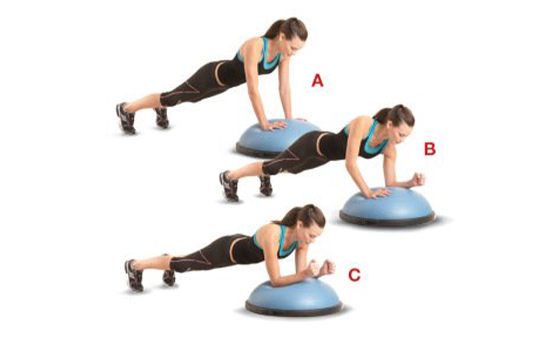
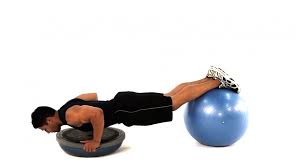
With the BOSU dome up and the platform on a nonslip floor, a coach may begin with your knees on the floor and forearms supported by the dome. Lean into the position only as far as you can control. Agree on the setup and exit before starting.

A brief controlled hold can be sufficient for practice. Moving to the toes is a separate progression, not a requirement. Do not deliberately rock the device, add a second ball under your feet, or continue until your position collapses.

Option 2: Seated Control With the Feet Supported

When appropriate, sitting on the dome with both feet on the floor can provide a supported balance task. A coach can help you find a comfortable position and decide whether a small weight shift adds anything useful.

Keeping the feet supported is not cheating. Lifting the feet, leaning back, and adding arm movements all change the task. There is no need to combine those changes or turn the exercise into a maximum-duration test.

Option 3: A Stable-Ground Alternative

A suitable side-plank variation, bridge, or controlled arm-and-leg movement on the floor may better match your goal. Your coach can adjust the support, range, and amount of work. A device-free exercise is not an inferior fallback.

For instance, a side-plank variation with bent knees may be worth discussing when a straight-leg version is too demanding. Shoulder comfort, the ability to get down and up, and your relevant medical guidance all affect the choice.

Choose What You Are Measuring

Record the exercise version, surface, assistance, and repetitions or hold duration. A longer hold achieved by changing position is not the same comparison as repeating the original task. Progress may be smoother movement or less unnecessary tension rather than more seconds.

Research on unstable-surface resistance training does not establish that unstable equipment is universally superior. Use the equipment because it serves the task, not because it looks advanced.

Keep Safety and Symptoms Separate From Effort

Follow your model’s instructions. BOSU discourages standing on the hard platform side. Use a clear area and an appropriate way to enter and leave the exercise.

A general plank recommendation cannot determine what is appropriate for someone with back pain, a recent operation, or another medical condition. Stop for pain or dizziness and seek individualized advice for persistent or unexplained symptoms.

Build a Plan Around Your Needs

Compare BOSU and stable-surface strength work, or read our bodyweight-training introduction. Then bring your questions to a Free Body Diagnostic at VIP Personal Fitness.

We are downstairs at 1620 Lemoine Ave, Suite 1, Fort Lee. The complimentary consultation helps discuss fitness goals and coaching options; it is not a medical diagnosis or rehabilitation appointment.
V.I.P 1 to 1 Fitness Center is hands down Fort Lee’s best kept secret! About a year ago I felt like I wasn’t able to keep up with my three kids. I knew it was time to make a change both physically and mentally. I contacted Brian Hernandez and have been training with Brian for less than 3 months. The compliments I began receiving about my shape, I had not heard in over a decade. Not to mention, the impact Brian has had on my overall well being is beyond descriptive. I have recommended Brian to 4 of my friends and they are as happy as I am with their results. All that I can say, if you are serious and committed to truly making a positive change, reach out to Brian and find out for yourself. This is the best decision I have ever made!!!!

BOSU vs. Stable Surfaces for Strength Training

BOSU vs. Stable Surfaces for Strength Training

Adding a BOSU to a strength exercise changes the task; it does not automatically improve it. If balance becomes the main limitation, you may be practicing stability while reducing the load or work you can perform. That can be a deliberate choice, but it should be a choice rather than a default upgrade.

This guide helps you discuss the trade-off with a coach at VIP Personal Fitness in Fort Lee. Neither a balance trainer nor a conventional weight is the best tool for every person and goal.

First Ask What the Set Is For

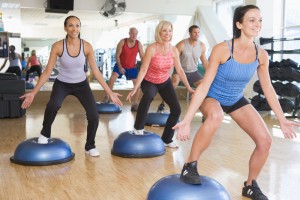
For a strength-focused squat or press, a stable floor, bench, or suitable machine makes it easier to standardize the setup and compare resistance over time. For a balance task, changing the support surface may be part of the intended challenge.

A systematic review of unstable-surface strength training found that outcomes depended on the comparison and population; it did not establish general superiority over stable-surface training. “More unstable” is not a reliable shortcut to “more effective.”

Compare Three Familiar Movements

Squat: on stable ground, a coach can adjust depth, assistance, and resistance for the strength task. A dome-supported version adds a balance demand and may limit the resistance you can manage. Do not infer that using a smaller weight on the dome provides the same strength stimulus.

Press: a suitable stable support lets you focus on the pressing movement and the way you get the weights into position. An unstable support introduces additional setup and control demands. It is not automatically a better choice because it looks more challenging.

Curl or overhead exercise: standing on a balance trainer is not required to train the arms. If your aim is to work the arms through an appropriate range, keep that purpose clear rather than combining tasks that compete for attention.

Use Separate Blocks When the Goals Differ

An illustrative session could include a short supported balance task followed by stable-surface strength work. This allows each task to have its own progression and stopping point. It is not a prescribed VIP session or a requirement to use balance equipment.

Similarly, a trunk-control exercise can be selected separately from the main lifting exercise. You do not need to make every movement train every quality at once.

Keep the Safety Limits Clear

BOSU advises against standing on its hard platform side. Follow the instructions for your model and keep the area clear. This article does not recommend weighted squats or overhead lifting while balancing on that platform.

Do not copy your stable-surface working weight into an unfamiliar unstable setup. Have a coach select an appropriate exercise first, and stop when you cannot control the movement or exit it deliberately. Pain and dizziness are reasons to stop and reassess.

Track Like With Like

Record the exercise, support surface, assistance, resistance, and repetitions. A set performed with a different support is not a direct continuation of the same strength test. Compare the same task under similar conditions before deciding that you became stronger or weaker.

When progression stalls, ask what limited the set: the intended muscles, balance, unfamiliar technique, or discomfort. The answer helps determine whether to keep the movement, simplify it, or use a different tool.

Choose Coaching, Not Equipment Hype

Explore semi-private personal training at VIP Personal Fitness, or discuss our coached group options. Book a Free Body Diagnostic to talk about your goals and starting point.

Find us downstairs at 1620 Lemoine Ave, Suite 1, Fort Lee. The complimentary consultation is separate from ongoing training and is not medical diagnosis or rehabilitation. Individual needs vary.

V.I.P 1 to 1 Fitness Center is hands down Fort Lee’s best kept secret! About a year ago I felt like I wasn’t able to keep up with my three kids. I knew it was time to make a change both physically and mentally. I contacted Brian Hernandez and have been training with Brian for less than 3 months. The compliments I began receiving about my shape, I had not heard in over a decade. Not to mention, the impact Brian has had on my overall well being is beyond descriptive. I have recommended Brian to 4 of my friends and they are as happy as I am with their results. All that I can say, if you are serious and committed to truly making a positive change, reach out to Brian and find out for yourself. This is the best decision I have ever made!!!!

Stretching With a BOSU Ball: When Support Helps

Stretching With a BOSU Ball: When Support Helps

A BOSU is optional for flexibility work. Use it only when the position helps you reach and control the movement you intend. If balancing distracts you from the stretch, a stable floor, chair, or fixed support may be a better choice.

Stretching should not become a test of how far you can force a joint. The suggestions below are general examples to discuss with a coach, not treatment for a particular pain or injury.

Separate Flexibility From Balance

Flexibility concerns available movement; balance concerns controlling your position. Combining them is sometimes possible, but it is not automatically more efficient. Ask which quality you are trying to practice and whether the added task gets in the way.

For example, standing on a dome while pulling one arm across the chest makes the setup harder to balance. It does not establish that the shoulder receives a more useful stretch. You can perform an appropriate shoulder stretch while standing on stable ground or sitting in a stable chair.

Warm Up and Stay Within a Comfortable Range

AAOS flexibility guidance recommends warming up and stretching gently rather than bouncing or forcing through pain. Choose duration and position to suit the person. A one-minute hold is not a requirement for every stretch.

Some sessions use controlled movement preparation before exercise and other flexibility work afterward. Your coach can explain why a particular exercise belongs at that point in the session. Not every feeling of stiffness calls for the same stretch.

Calf Work: Start With Dependable Support

A stable-wall calf stretch is one option: use the wall for support, place one foot behind the other, and gently shift until you feel a comfortable stretch with the rear heel supported. A coach can adjust the stance and position.

Putting a foot on a dome changes the angle and stability. Do not assume that this is a necessary progression, especially when you already have difficulty controlling the stable version. Stop rather than forcing the heel or ankle into a painful position.

Hamstring Work: Choose a Position You Can Control

A seated position on a stable support may allow a comfortable, gentle forward hinge. Keep the reach within your available range rather than treating touching the toes as the goal. The setup should not require someone to push you farther.

Sitting on a BOSU may change the height and support, but the device is not a reason to reach as far as possible. Discuss a different position when balance, pressure, or getting down to the equipment creates a problem.

Shoulders and Triceps: Do Not Add Instability by Default

Choose a comfortable supported position for upper-body stretching. Do not pull an arm beyond its available range or assume that more discomfort creates more benefit. Existing shoulder restrictions may call for an entirely different exercise.

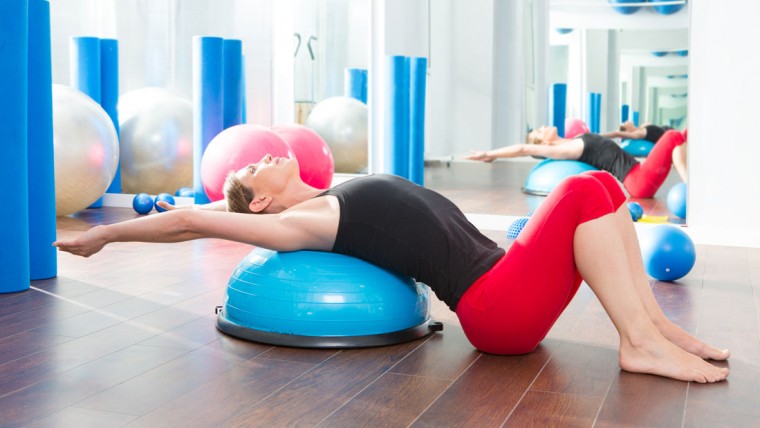
Likewise, an exaggerated back arch over a dome should not be described as a universal way to improve posture or relieve back pain. A bridge used for strength and a stretch used for mobility have different purposes.

When a BOSU Is Used

Follow the instructions for the model and keep a clear, nonslip area. BOSU advises against standing on the platform side. Have an appropriate way to enter and leave the position. Stable support remains a legitimate choice at every experience level.

Discuss Movement Options in Fort Lee

Read our warm-up guide to connect preparation with the workout ahead. For coaching, book a Free Body Diagnostic at VIP Personal Fitness, 1620 Lemoine Ave, Suite 1.

The consultation is complimentary and separate from ongoing training. Persistent pain, tingling, or unexplained movement loss deserves healthcare assessment; a fitness consultation does not diagnose the cause.

V.I.P 1 to 1 Fitness Center is hands down Fort Lee’s best kept secret! About a year ago I felt like I wasn’t able to keep up with my three kids. I knew it was time to make a change both physically and mentally. I contacted Brian Hernandez and have been training with Brian for less than 3 months. The compliments I began receiving about my shape, I had not heard in over a decade. Not to mention, the impact Brian has had on my overall well being is beyond descriptive. I have recommended Brian to 4 of my friends and they are as happy as I am with their results. All that I can say, if you are serious and committed to truly making a positive change, reach out to Brian and find out for yourself. This is the best decision I have ever made!!!!

BOSU Cardio: Build Conditioning Without Rushing Balance

BOSU Cardio: Build Conditioning Without Rushing Balance

A BOSU can add variety to a workout, but you do not need to move rapidly on an unstable surface to improve your cardiovascular fitness. When balance limits your movement before your intended conditioning effort does, choose a more stable activity rather than forcing the pace.

This guide separates two questions: how to plan a manageable cardio session and when a BOSU task adds something useful. The examples are educational, not a workout prescription for every participant at VIP Personal Fitness.

Decide Whether You Are Training Balance or Conditioning

A deliberate step onto a dome requires different attention from a steady walk. Both can belong in a program, but combining them does not guarantee that you improve both qualities equally.

For a conditioning goal, choose movement that lets you sustain an appropriate effort with control. For a balance goal, allow enough time to position yourself, use support, and step off deliberately. Do not turn a balance drill into a race to keep the heart-rate number high.

A Fifteen-Minute Conditioning Example

One illustrative session uses three minutes of comfortable movement to begin, eight minutes alternating one minute of purposeful movement with one minute at an easier pace, and four minutes gradually easing down. Four work-and-recovery pairs total eight minutes; the complete example totals fifteen.

The purposeful movement could be walking or a suitable stable-ground movement such as marching or side steps. Choose a pace that fits your current ability. Shorten the work periods or extend recovery when needed; completing the clock is not more important than maintaining control.

This is an interval structure, not necessarily high-intensity interval training. Using a timer does not make the effort high intensity, and high intensity is not a requirement for a useful starting session.

Where a BOSU Might Be Included

After a coach has checked the setup, a brief, supported dome-up task might be practiced separately from the conditioning intervals. For example, learning a controlled step on and off with a secure handhold can be treated as skill practice rather than a maximum-speed cardio drill.

Only use a version you can enter and leave deliberately. A stable step or the floor may be a more appropriate choice. Replacing the BOSU is a programming decision, not a failure to complete the workout.

Keep the Equipment Limits Clear

BOSU advises against standing on the hard platform side. Follow the instructions for your model and keep the area clear. This guide does not recommend fast jumps between balance trainers, jumping jacks on an inverted platform, or racing through burpees while losing your footing.

Check that the equipment and floor are not slippery. Stop when fatigue changes your ability to control the task. Adding a pad nearby does not make an uncontrolled fall safe.

Review Effort and Recovery, Not Just Sweat

Write down the activity, work periods, recovery periods, and how the session felt. Were you able to repeat the planned movement? Did you need extra recovery? This gives your coach useful information for the next session.

A watch’s calorie estimate is not a precise measurement of your workout, and no BOSU circuit guarantees a particular amount of fat loss. Progress might mean completing the same appropriate activity more comfortably before changing the workload.

Make the Whole Week Work

Cardio can complement strengthening work rather than replace it. Read our walking and strength-training guide for a weekly planning example, or try the concepts in our bodyweight cardio guide without balance equipment.

New pain, dizziness, or unusual breathing difficulty is a reason to stop and obtain appropriate advice. A fitness article cannot determine the cause or clear you to continue.

Discuss Coached Training in Fort Lee

Book a Free Body Diagnostic at VIP Personal Fitness, downstairs at 1620 Lemoine Ave, Suite 1. The complimentary consultation includes an InBody assessment and a discussion of your goals and suitable training options, with no obligation to purchase.

V.I.P 1 to 1 Fitness Center is hands down Fort Lee’s best kept secret! About a year ago I felt like I wasn’t able to keep up with my three kids. I knew it was time to make a change both physically and mentally. I contacted Brian Hernandez and have been training with Brian for less than 3 months. The compliments I began receiving about my shape, I had not heard in over a decade. Not to mention, the impact Brian has had on my overall well being is beyond descriptive. I have recommended Brian to 4 of my friends and they are as happy as I am with their results. All that I can say, if you are serious and committed to truly making a positive change, reach out to Brian and find out for yourself. This is the best decision I have ever made!!!!

BOSU Balance Training: A Step-by-Step Starting Guide

BOSU Balance Training: A Step-by-Step Starting Guide

Balance training begins with a task you can control and a dependable way to recover your footing. A BOSU Balance Trainer can be one tool, but you do not have to start on an unstable surface or progress to jumps to make practice worthwhile.

The sequence below is an educational example to discuss with a coach. It is not a fall-prevention assessment or an exercise prescription for someone with a medical balance disorder.

Step 1: Establish a Comfortable Stable-Ground Task

Begin near a securely fixed handhold, on a level, nonslip surface. A coach might first observe a comfortable standing position or a small, controlled shift of weight between the feet. The point is to understand your starting task, not to provoke a loss of balance.

A loose broom, rolling chair, or another unstable object is not reliable support. If standing itself is difficult, seek appropriate assessment rather than moving to more challenging equipment.

Step 2: Check the Equipment and Space

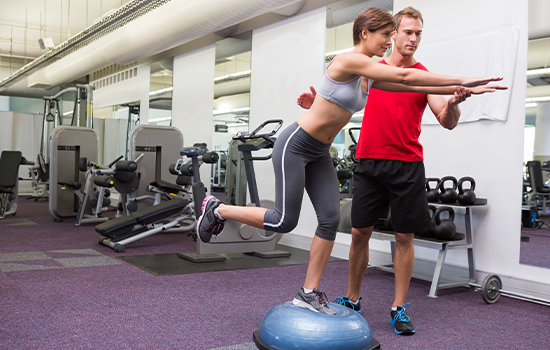
Use the instructions for your BOSU model and check its condition and inflation. Keep the surrounding area clear. The manufacturer does not recommend standing on the platform side. Dome-up use still requires an appropriate task and supervision when needed.

Before stepping on, establish where your support will be and how you will step back onto the floor. Do not add weights, a ball toss, or a closed-eye challenge while learning the setup.

Step 3: Practice a Supported Position

If your coach considers it appropriate, use secure support to practice getting onto and off the dome with both feet. Keep the task brief enough to remain in control. The goal is a repeatable entry and exit, not a record-length hold.

Next, the coach might introduce a small shift of pressure while you retain support. An uncontrolled step off is a reason to simplify the task. It is not evidence that you should try again faster.

Step 4: Progress One Feature at a Time

A progression could be a slightly longer controlled attempt, a modestly smaller amount of hand support, or a different suitable movement. Changing several features together makes the result difficult to interpret.

Standing on one leg is not a compulsory milestone. Nor is turning the device upside down. A stable-ground task may remain the better choice for your goal, and the amount of support you use should not become a competition with another participant.

Step 5: Review What Improved

Record the task, surface, support, and reason the attempt ended. Can you repeat it more confidently under the same conditions? Can you step off deliberately? Those observations are more useful than simply calling the workout harder.

Improvement on one device does not establish that you will avoid falls in daily life or perform a sport better. Review the actual activity you want to improve, and obtain a clinical assessment when balance changes are persistent or unexplained.

Where Strength Training Fits

Balance and strength are related training considerations, but they are not interchangeable. You might practice a supported balance task separately from stable-surface resistance exercises. Read our guide to choosing the training surface for that distinction.

For older adults, CDC activity guidance includes balance activities as well as aerobic and strengthening work. It does not require a BOSU or recommend one exercise for every person.

Ask About an Appropriate Starting Point

Schedule your Free Body Diagnostic at VIP Personal Fitness in Fort Lee to discuss goals, experience, and coaching needs. We are downstairs in Suite 1 at 1620 Lemoine Ave. The consultation is complimentary and carries no purchase obligation; it does not diagnose the cause of balance problems.

V.I.P 1 to 1 Fitness Center is hands down Fort Lee’s best kept secret! About a year ago I felt like I wasn’t able to keep up with my three kids. I knew it was time to make a change both physically and mentally. I contacted Brian Hernandez and have been training with Brian for less than 3 months. The compliments I began receiving about my shape, I had not heard in over a decade. Not to mention, the impact Brian has had on my overall well being is beyond descriptive. I have recommended Brian to 4 of my friends and they are as happy as I am with their results. All that I can say, if you are serious and committed to truly making a positive change, reach out to Brian and find out for yourself. This is the best decision I have ever made!!!!