

Archives by date

You are browsing the site archives by date.

Walking and Strength Training: A Practical Weekly Plan

Walking and Strength Training: A Practical Weekly Plan

Walking and strength training have complementary roles: walking can add aerobic activity to your week, while resistance exercises provide a different challenge for your muscles. You do not need to turn every walk into a hard workout or replace every walk with a gym visit.

At VIP Personal Fitness in Fort Lee, a useful planning conversation includes what you do outside your coached sessions. This guide shows how to build a manageable week around your starting point rather than a universal step count.

Start With Your Current Routine

For several typical days, note when you walk, for roughly how long, and how it feels. Include workdays and a weekend. A person who already walks regularly needs a different starting discussion from someone who becomes uncomfortable after a few minutes.

Choose a repeatable opportunity: a short walk after lunch, part of an errand, or an indoor route when weather makes outdoor activity unsuitable. Consider crossings, lighting, walking surfaces, and any mobility needs. A route is useful when you can access it comfortably, not simply because it is longer.

Understand the Difference Between a Stroll and Moderate Activity

The CDC’s talk test describes moderate effort as a pace at which you can talk but not sing. The speed that produces that effort differs between people. A relaxed stroll still gets you moving, but it should not automatically be recorded as moderate-intensity exercise.

Do not use a neighbor’s pace or a watch’s calorie estimate as a requirement. Some people need a slower pace, shorter bouts, an assistive device, or a different aerobic activity. Ask for individualized guidance when symptoms or medical restrictions affect your options.

An Illustrative Starting Week

Suppose you are comfortable walking for ten minutes and have agreed on two coached strength sessions. One possible week is a ten-minute walk on Monday, strength training on Tuesday, a ten-minute walk on Wednesday, a flexible rest or easy-activity day on Thursday, strength training on Friday, and another short walk during the weekend.

This example includes 30 minutes of walking; it is a starting schedule, not the full public-health activity target. CDC guidance for adults includes at least 150 minutes of moderate aerobic activity weekly and muscle-strengthening activity on at least two days. Build toward an appropriate target gradually; your starting week may contain less.

Your trainer may recommend a different schedule or training frequency. A 45-minute semi-private appointment should not automatically be counted as 45 minutes of moderate aerobic exercise: instruction, rest, and the actual activities matter.

Add One Manageable Change

When your starting routine feels repeatable, consider extending one walk or adding another short outing. Do not increase duration, speed, hills, and the number of walks all at once. Review how the change fits with your strength sessions and the rest of your life.

For example, extending three ten-minute walks to fifteen minutes adds fifteen minutes across the week. That is a scheduling illustration, not a prescribed progression rate. There is no need to earn the right to rest by reaching a device’s step target.

Use Walking for More Than a Weight-Loss Calculation

A useful goal could be completing a familiar route more comfortably or making activity a regular part of your lunch break. Walking does not guarantee a particular change on the scale, and an app cannot precisely convert one walk into pounds of body fat lost.

Record attendance and exercise performance alongside any agreed body-composition measures. Our consistency guide explains how to review a routine without an all-or-nothing approach.

Know When to Change the Plan

Choose an indoor alternative when outdoor conditions are unsuitable. Stop for new pain, dizziness, or other concerning symptoms rather than pushing to finish a route. Severe chest discomfort, fainting, or serious breathing difficulty needs urgent medical attention, not a different walking target.

Connect Your Walks With Coached Training

Explore 45-minute semi-private training for two to four clients, or discuss our other coached group formats. Book your Free Body Diagnostic to review your fitness starting point and schedule.

The complimentary 30-minute consultation includes an InBody assessment and carries no purchase obligation. VIP Personal Fitness is downstairs at 1620 Lemoine Ave, Suite 1, Fort Lee. This guide is general education; individual exercise needs vary.

Strength Training With GLP-1 Treatment: Choosing the Right Coaching

Strength Training With GLP-1 Treatment: Choosing the Right Coaching

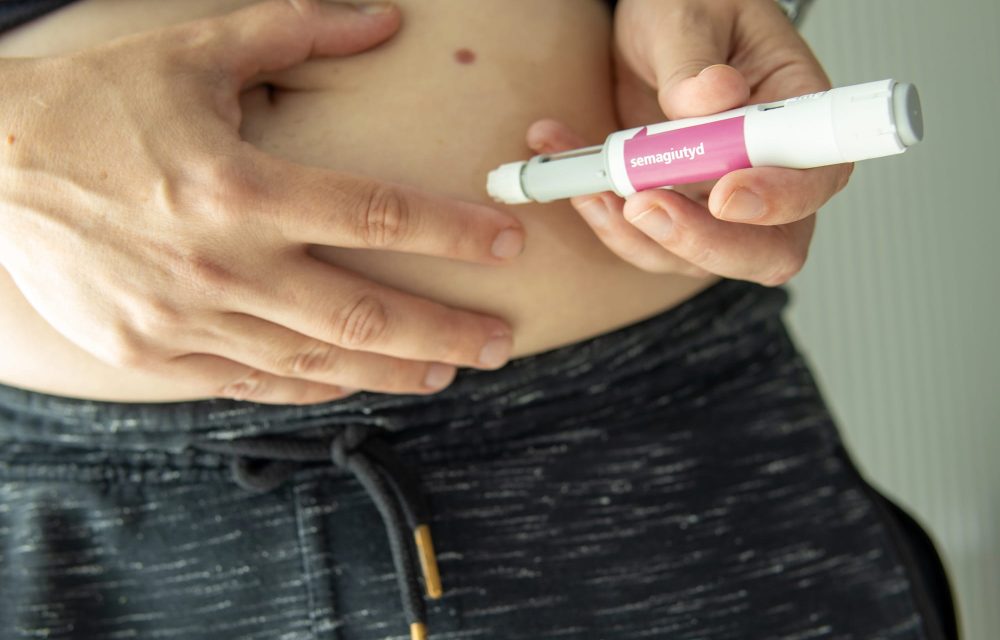
Strength training can be an important part of a medically supervised weight-management plan, including treatment with GLP-1-based medication. The goal is not to compensate for taking medication or to promise that exercise will prevent every change in lean mass. It is to choose appropriate activity, maintain useful training habits, and monitor how you function.

VIP Personal Fitness in Fort Lee provides exercise coaching. Your prescribing clinician manages medication, side effects, and medical restrictions; a registered dietitian can individualize nutrition when needed. These roles complement one another.

Start With Your Current Needs, Not a Drug-Specific Workout

The fact that you take a particular medication does not tell a trainer which exercises, loads, or group size are right for you. Your training history, symptoms, current abilities, and clinical guidance are more useful starting information.

A joint advisory from four professional organizations emphasizes nutritional adequacy, resistance exercise, and assessment of strength and function during GLP-1 therapy. It is guidance for integrated care, not evidence that one commercial training format is superior.

Questions for Your Prescribing Clinician

Ask whether you have exercise restrictions, which symptoms should prompt contact, and how to handle days when eating or drinking is difficult. Discuss relevant medicines and any history of low blood sugar. Follow the plan for your own prescription rather than another person’s experience.

Tell your care team about persistent vomiting, inability to keep fluids down, recurrent dizziness, or unexplained weakness. Do not interpret those problems as a reason to exercise harder. Seek urgent help for severe symptoms. Do not change a dose or discontinue treatment based on gym advice.

Choosing a Training Environment

Semi-private training at VIP Personal Fitness involves 45-minute sessions with two to four clients. It may fit someone who wants a smaller shared setting and can practice suitable exercises while the trainer assists others. Discuss whether that level of attention matches your current needs.

Strength Camp or Boot Camp may suit people who enjoy a coached group environment and whose abilities and any restrictions fit the available session. Ask about modifications and the actual demands of the workout; a class name alone cannot answer that question.

Private one-to-one training at VIP Fitness Center upstairs provides a dedicated 30-minute appointment. It may be preferable when frequent individual feedback or privacy matters. It is still fitness coaching, not medical rehabilitation. Compare the options in our training-format guide.

What a Starting Strength Plan Could Address

A coach may choose a few suitable pushing, pulling, lower-body, and trunk exercises, with time to learn and recover. A supported sit-to-stand and a cable row are examples of movements to discuss, not a prescription for everyone using medication.

Record the exercise version, resistance, repetitions, and how the session felt. Progress can mean better control or a manageable increase in work; it does not require a heavier weight at every visit. When your exercise tolerance changes, tell the trainer rather than trying to match another participant.

Track More Than the Scale

Changes in body weight, measured lean mass, and strength are related but different observations. Lean mass is not a direct measurement of skeletal muscle alone. An InBody result also cannot establish why a measurement changed or diagnose a muscle condition.

Use comparable conditions for repeat assessments, following InBody’s preparation guidance. Discuss the trend alongside training records and everyday function. Do not treat one small scan change as proof that a program succeeded or failed.

Nutrition and Long-Term Planning

Reduced appetite can make adequate eating more difficult. Ask your prescriber or dietitian about your overall intake and an appropriate protein plan; a generic target is not suitable for every health condition. Adding a shake does not guarantee muscle retention.

Plan exercise as part of ongoing care, not as proof that medication should be stopped. If treatment changes, coordinate the next steps with the prescribing team. Neither training nor a body-composition assessment can promise prevention of weight regain.

Discuss Fitness Coaching in Fort Lee

Book a Free Body Diagnostic at VIP Personal Fitness, downstairs at 1620 Lemoine Ave, Suite 1. The complimentary 30-minute consultation includes an InBody assessment and a discussion of your goals, schedule, and coaching options.

Bring relevant exercise guidance from your healthcare team. There is no obligation to purchase. This is a fitness consultation, not medical clearance, diagnosis, or medication treatment; individual needs and results vary.