Brian Hernandez

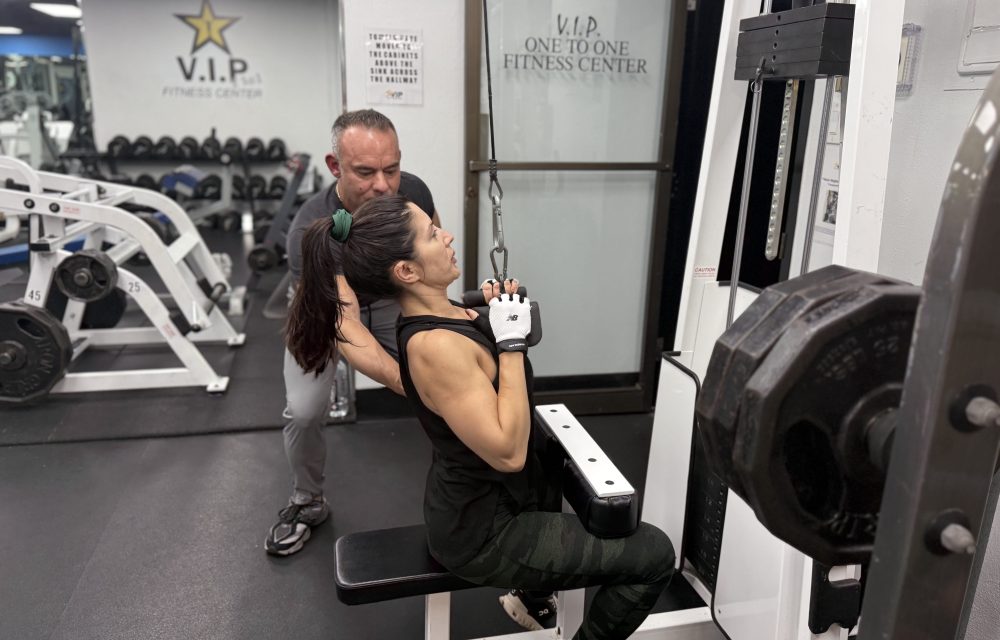
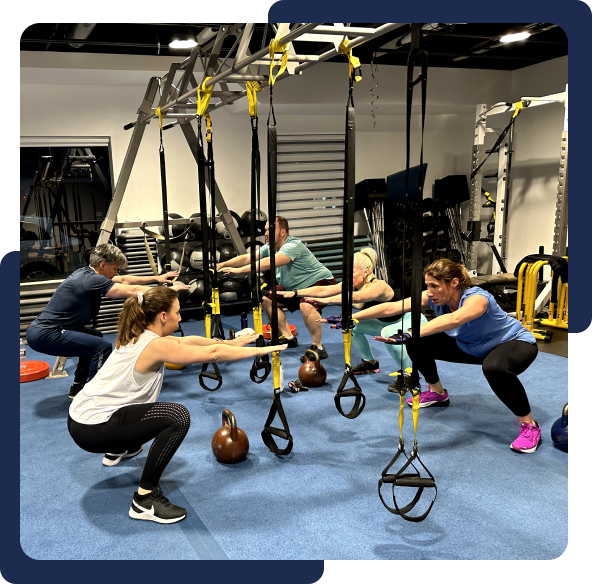
Brian Hernandez is the owner of VIP Personal Fitness and a personal trainer in Fort Lee, New Jersey. He helps adults build practical strength-training routines through semi-private coaching and coached small-group workouts, emphasizing clear instruction, appropriate exercise choices, steady progression, and consistency.

VIP Personal Fitness is downstairs at 1620 Lemoine Ave, Suite 1, Fort Lee. Its programs include 45-minute semi-private sessions for two to four clients, 30-minute Strength Camp, and 45-minute Boot Camp. Private one-to-one training is offered separately at VIP Fitness Center upstairs in Suite 2.

Brian's articles help readers choose a coaching format, plan repeatable routines, and understand fitness assessments in context. His writing provides general fitness education, not medical diagnosis, rehabilitation, or individualized medical nutrition advice.

Your First Boot Camp Class in Fort Lee: What to Expect

Your First Boot Camp Class in Fort Lee: What to Expect

You do not need to get fit before asking about Boot Camp. You need a starting session that fits your current ability, enough explanation to follow it, and a schedule you can repeat. At VIP Personal Fitness in Fort Lee, Boot Camp is a 45-minute coached group workout—not an invitation to compete with the most experienced person in the room.

My recommendation for a first visit is simple: focus on understanding the workout before trying to impress anyone. Here is what to clarify before joining, what to pay attention to during the session, and how to decide whether this format works for you.

Start With the Right Appointment

A Free Body Diagnostic and a Boot Camp workout are different appointments. The diagnostic is a complimentary 30-minute private consultation with an InBody body-composition assessment and a conversation about your goals, experience, and available times. It is not a free 45-minute class or medical clearance.

Use that conversation to describe the help you need. Perhaps you want to learn resistance exercises, return after a long break, or find an alternative to exercising alone. Share relevant restrictions and ask which available workout is appropriate. Confirm your class registration and arrival instructions before coming in.

Know Which VIP Program You Are Booking

Boot Camp lasts 45 minutes. Strength Camp is a separate 30-minute coached group format. Semi-private training lasts 45 minutes with two to four clients. These are not interchangeable names for the same appointment.

VIP Personal Fitness is downstairs at 1620 Lemoine Ave, Suite 1, Fort Lee, NJ 07024. The private one-to-one service at VIP Fitness Center is upstairs in Suite 2. Choosing the correct program and suite prevents your first visit from starting with unnecessary confusion.

Prepare for Participation, Not a Fitness Test

Wear clothing that lets you move comfortably and footwear appropriate for the planned activities. Bring water and any items the team specifically requests. Ask about arrival time and storage rather than assuming the studio has the same setup as a large gym.

Before the workout begins, tell the trainer which movements are unfamiliar and any exercise guidance from your healthcare team. A useful opening sentence is: “This is my first group workout, and I would like you to check my starting versions.” You do not need to announce personal health details to the whole class.

Expect to Learn the Setup as Well as the Exercise

Pay attention to how an exercise begins and ends, where equipment belongs, and what to do when the group changes tasks. For a resistance exercise, ask what range and amount of work you should use. For a timed activity, ask whether you should keep moving, pause, or use a different version.

A coach might choose a supported squat or elevated push-up for one participant while someone else uses a different variation. Those are examples of individual adjustments, not a fixed Boot Camp exercise list. Our bodyweight-training guide explains why the exercise name alone does not determine its difficulty.

Use Feedback Instead of Comparison

Your first useful question is not “Did I keep up?” It is “Did I understand what I was doing and get help when I needed it?” A shared timer does not require everyone to use the same resistance, repetitions, or pace. Ask for clarification before improvising an unfamiliar movement.

Rest when instructed or when you need to pause and check the exercise. Stop for pain or concerning symptoms rather than treating them as proof of effort. A trainer can adjust a workout within their scope, but cannot diagnose a medical problem from the way an exercise feels.

Decide What the First Session Told You

Afterward, note whether the instructions made sense, the starting exercises were manageable, and you could get coaching. Include practical observations: Did travel fit your day? Was the group environment enjoyable? Which movement needs another explanation?

Do not judge the entire program by sweating, soreness, or a same-day scale reading. Bring your questions to the next conversation. If you prefer fewer people or more individual attention, compare the options in our VIP training-format guide.

Take the First Step at VIP Personal Fitness

Book your Free Body Diagnostic and tell us you are interested in Boot Camp. Bring your preferred training days and your questions about the first workout. We will discuss available options before you decide on a program. The consultation is complimentary, with no obligation to purchase.

Is Semi-Private Training Right for You? A Practical Checklist

Is Semi-Private Training Right for You? A Practical Checklist

Semi-private training may fit you when you want personalized coaching, enjoy a small shared setting, and can practice suitable exercises without the trainer beside you every moment. It may not be the right starting point when you need continuous individual assistance, a different schedule, or clinical assessment before exercise.

At VIP Personal Fitness in Fort Lee, semi-private sessions last 45 minutes and include two to four clients. Use these five questions to prepare for a useful conversation, not to score yourself as fit or unfit.

1. What Do You Want Help Doing?

Choose a concrete starting goal: learn how to use resistance exercises, return to a repeatable routine, improve a particular strength task, or support a body-composition goal. “Get fitter” is a reasonable ambition, but a more specific first step helps explain what you need from the coach.

For example, someone who has not trained in years may initially need exercise instruction and a manageable schedule. Someone already training regularly may need a review of progression. Both could consider semi-private sessions, but their coaching needs are different.

2. How Much Uninterrupted Attention Do You Need?

In semi-private training, the coach divides attention among a small number of participants. Ask what happens while the trainer is helping another person: will you know your next exercise, the intended repetitions, and when to stop and ask for help?

Prefer private one-to-one coaching when you want the entire appointment focused on you. Private sessions at VIP Fitness Center are 30 minutes and take place upstairs in Suite 2. They are an alternative service, not a requirement that everyone must complete before joining a group.

3. Are There Health or Movement Issues to Discuss First?

Tell the team about relevant exercise restrictions, recent surgery, current pain, balance difficulties, or anything your clinician has advised. Sharing that context is more useful than guessing that a smaller group automatically makes every exercise suitable.

A trainer can discuss exercise options within their scope. They cannot diagnose an injury or provide medical clearance. Significant or unexplained symptoms may need healthcare assessment before a training-format decision. A fitness consultation and an InBody reading do not replace that assessment.

4. Can the Actual Appointment Times Fit Your Week?

Look at the coming four weeks rather than an ideal week. Include work, family responsibilities, travel, and the time needed to arrive. Two 45-minute sessions per week would mean eight appointments and six hours of scheduled training across four weeks, before travel.

Ask about current available times, booking procedures, and cancellation terms. Do not assume you can always move a missed visit to another day or bring a friend into an existing session. Resolve those details before choosing the package.

5. Would You Enjoy Sharing the Environment?

You do not need to be as strong or experienced as the other participants. You do need to feel comfortable asking questions, receiving feedback, and allowing someone else’s workout to be different from yours.

Some people prefer a larger coached class; others prefer a private appointment. Our comparison of semi-private, Strength Camp, Boot Camp, and private training explains the practical differences without treating one preference as better than another.

Bring These Notes to Your Consultation

Write down your main goal, the days you can realistically attend, any relevant restrictions, and the part of training you find most confusing. Add your questions about cost and what is included. You do not need a perfect exercise history, a target body-fat percentage, or a partner ready to join before asking about options.

The team can then discuss whether the available semi-private service fits those needs. Read our semi-private program guide for more about the shared coaching format.

What Would a Good First Month Look Like?

A useful early review asks whether you attended, understood the exercise instructions, could access appropriate help, and found the schedule manageable. It is not a promise of a particular weight change in four weeks. If the setting is not working, identify the problem and discuss a different approach.

Take the Next Step

Schedule your Free Body Diagnostic at VIP Personal Fitness. The complimentary 30-minute private consultation includes an InBody body-composition assessment and discussion of your goals, starting point, and schedule. Find us downstairs at 1620 Lemoine Ave, Suite 1, Fort Lee, NJ 07024.

There is no obligation to purchase. The consultation helps you understand your training options; it is not a medical diagnosis or a substitute for individualized healthcare advice.


Semi-Private vs. Small-Group Training: Which VIP Program Fits?

Semi-Private vs. Small-Group Training: Which VIP Program Fits?

Semi-private training is not automatically better than a well-coached group class. The better choice depends on how much individual attention you need, the environment you enjoy, your goals, and the times you can actually attend.

VIP Personal Fitness in Fort Lee offers semi-private training and coached group programs. Rather than asking which format wins in every situation, compare what each one would solve for you.

The Four Options at a Glance

  • Semi-private personal training: 45 minutes with two to four clients at VIP Personal Fitness, downstairs in Suite 1.
  • Strength Camp: 30-minute coached small-group strength training at VIP Personal Fitness.
  • Boot Camp: a 45-minute coached group workout at VIP Personal Fitness.
  • Private personal training: 30-minute one-to-one appointments at VIP Fitness Center, upstairs in Suite 2.

These are different services, not a ranking from least to most effective. A group class can include instruction and exercise modifications. Semi-private training still involves sharing the trainer’s attention.

Choose Around the Attention You Need

Semi-private is worth considering when you want feedback and a smaller setting but are comfortable practicing an agreed exercise while the coach assists someone else. Read how our semi-private format works for the practical details.

Private training may be a better fit when you strongly prefer privacy, need frequent explanation, or want the full appointment focused on you. Private coaching is not medical rehabilitation, however. An injury that needs assessment belongs with the appropriate healthcare professional before a trainer decides how to accommodate it.

Choose Around the Setting You Enjoy

Some people like the shared momentum of a class and feel more comfortable following a coached group session. Others want fewer people around them while they learn. Neither preference tells you how committed someone is.

Explore VIP Boot Camp when a group workout appeals to you, and discuss Strength Camp when a shorter strength-focused group session fits your week. Ask how a coach handles differences in experience before assuming that every person must use the same weight or pace.

Compare the Real Weekly Commitment

For an illustrative twice-weekly schedule, two 30-minute visits mean 60 minutes of appointment time; two 45-minute visits mean 90 minutes. Travel and changing add to both. The extra 30 minutes does not by itself establish a better program.

A conveniently timed class you can attend reliably may fit better than a smaller session that repeatedly conflicts with work. Equally, a short appointment may not provide the setting or attention you need. Confirm current availability rather than building a plan around an assumed time slot.

Compare Price With What Is Included

Ask for the current price, session length, number of visits, package terms, and any additional services included. Comparing only the price of one visit can hide differences in the total commitment. This article does not quote a starting rate because your decision should use the actual offer available when you register.

The relevant question is whether the service provides the coaching you need at a commitment you can maintain, not whether it is the least expensive option per minute.

Three Example Decisions

A returning beginner who wants a quieter learning environment: discuss semi-private and private options, including how much continuous attention is necessary. A person who enjoys coached group workouts and has a tight schedule: compare available Strength Camp times. A person who wants a longer group session: ask about Boot Camp and appropriate modifications.

These are hypothetical examples, not client case studies or guaranteed recommendations. Your history and the available sessions may change the answer.

How to Tell Whether the Choice Is Working

After starting, review attendance, the clarity of the coaching, and progress toward your chosen goal. Ask whether you understand the exercises and can get help when needed. Do not judge the format solely by soreness, exhaustion, or comparison with another participant.

Use our semi-private readiness checklist to prepare questions. A change of format can be sensible, but first identify what is missing instead of assuming that all group classes lack accountability or that smaller groups eliminate injury risk.

Discuss Your Options in Fort Lee

Book a Free Body Diagnostic at VIP Personal Fitness, 1620 Lemoine Ave, Suite 1. Your complimentary 30-minute consultation includes an InBody assessment and a conversation about the program that fits your goals and schedule. No purchase obligation; individual needs and results vary.


How to Stay Consistent With Semi-Private Training

How to Stay Consistent With Semi-Private Training

A booked workout helps only when the appointment fits your life. Semi-private training gives you a defined coaching session, but it cannot remove a recurring work conflict, shorten your commute, or guarantee motivation. A useful consistency plan addresses those practical obstacles before they become repeated missed visits.

VIP Personal Fitness’s semi-private sessions last 45 minutes and include two to four clients. Here is an illustrative four-week planning approach you can discuss with the team; it is not a required VIP protocol or a promise of a particular result.

Before Week One: Choose Times You Can Protect

Open your calendar for the coming month. Identify the days that usually work, then mark predictable exceptions. A session that conflicts with a regular meeting is not a dependable choice simply because you hope the meeting will end early.

Include travel and changing time. For a hypothetical twice-weekly plan, eight 45-minute appointments equal six hours of scheduled training across four weeks. Confirm the actual available slots and package terms before registering. Three weekly visits may be appropriate for another person; the purpose is a workable commitment, not the smallest possible number.

Week One: Make Arriving Easier

Choose one repeatable preparation cue. You might put your workout clothing with your work bag the evening before, or check your appointment time while planning the next day’s commute. Select the cue you can actually repeat rather than building an elaborate routine around getting ready.

Tell your coach what makes starting difficult. Not knowing how a session works calls for explanation; uncertainty about your strength calls for an appropriate starting exercise. Neither problem is solved by being told to try harder.

Week Two: Record What Happened

Compare scheduled and completed appointments. Completing six of eight planned visits is 75% attendance. That calculation is information, not a grade on your character. Note what prevented the other two visits and whether the same conflict is likely to happen again.

Also record one training detail worth reviewing, such as the version of a squat you practiced or the resistance used for a row. Better information makes the next coaching conversation more useful than simply deciding whether you felt exhausted.

Week Three: Test Your Backup Plan

Know how to contact the team and what your booking and cancellation terms allow. A backup time is helpful only when it is actually available. Do not assume that a missed visit will be credited, that a trainer will automatically follow up, or that another format is interchangeable with your package.

When travel or a busy period prevents a visit, an agreed bodyweight backup routine or a suitable walk may help maintain a habit. It does not necessarily replace the exercises or coaching of the missed appointment. Do not double the next workout as punishment.

Week Four: Review the Fit, Not Just the Scale

Ask four questions: Did the schedule work? Did you understand what to do? Could you get useful coaching? What did your training records show? Then choose one adjustment: a different time, a clearer exercise explanation, or a change in workload when appropriate.

A four-week review is a checkpoint, not a transformation deadline. Attendance can improve while a body-composition goal still needs more time or a broader review. Avoid changing the schedule, exercises, food intake, and extra activity simultaneously without understanding the reason.

Use the Group for Support, Not Comparison

Training alongside other people can be enjoyable, but you are not required to match their weights, speed, or experience. Tell the coach when you need clarification rather than hiding confusion to keep up. Encouragement should help you follow an appropriate plan, not pressure you to ignore discomfort.

Someone who prefers a different environment can compare VIP’s training formats. The right setting is the one that provides suitable coaching and a commitment you can maintain.

Start With Your Real Schedule

Book a Free Body Diagnostic and bring the days and times that realistically work for you. The complimentary 30-minute consultation includes an InBody assessment and discussion of your fitness goals and starting point.

VIP Personal Fitness is downstairs in Suite 1 at 1620 Lemoine Ave, Fort Lee. There is no obligation to purchase, and no need to have your entire routine figured out before that conversation.


Semi-Private Personal Training in Fort Lee: How It Works

Semi-Private Personal Training in Fort Lee: How It Works

Semi-private personal training at VIP Personal Fitness means 45-minute coached sessions with two to four clients. You share the training environment and the trainer’s attention, while receiving guidance that takes your starting point and goals into account. It is a different service from a gym-only membership, a large exercise class, or a private appointment.

Our studio is downstairs at 1620 Lemoine Ave, Suite 1, Fort Lee. This guide explains what to consider before choosing semi-private training and how it compares with the other VIP programs.

What Does Personalized Coaching Mean in a Shared Session?

The important question is not whether everyone holds the same piece of equipment. It is whether the exercise, resistance, range of motion, and amount of work are appropriate for each person. Two clients might practice a similar movement while using different versions or different loads.

For example, one person could practice sitting down to and standing up from a box, while another performs a loaded squat. That is an illustration of how coaching can adapt a movement, not a fixed VIP workout or a promise that every participant always follows a completely separate program.

During your consultation, discuss the kind of feedback you need. Someone who needs uninterrupted assistance throughout every exercise may be better served by private training or by clinical rehabilitation, depending on the situation. A smaller group does not remove every limitation of sharing a trainer.

How a 45-Minute Session Can Be Organized

A useful session needs room for a check-in, preparation, selected exercises, rest, and coaching. An illustrative structure is five minutes to check in and warm up, 35 minutes for coached exercise and necessary rest, and five minutes to record the session and discuss the next step. Actual timing and exercise selection depend on the participants and the session.

The purpose is not to fill every second with movement. Learning a new exercise, adjusting equipment, or recovering between demanding sets can be a productive part of training. Moving faster is not automatically a better use of the appointment.

What Progress Should You Look For?

Choose a goal you can review: completing your planned visits, performing a familiar movement with more control, or gradually increasing appropriate training work. Record enough information to make a useful comparison rather than relying on how sweaty a session felt.

For strength goals, compare the same exercise under similar conditions. For a body-composition goal, discuss the broader plan and how measurements will be interpreted. An InBody reading adds information, but one measurement cannot explain everything about your progress or diagnose a health condition.

The American College of Sports Medicine’s resistance-training guidance emphasizes consistency and tailoring the program to individual goals. It does not establish that one group size guarantees better results for everyone.

How Semi-Private Differs From the Other VIP Options

Semi-private: 45-minute sessions for two to four clients, with personalized coaching in a shared setting. Strength Camp: a 30-minute coached small-group format. Boot Camp: a 45-minute coached group workout. All three belong to VIP Personal Fitness.

For dedicated one-to-one attention, VIP Fitness Center’s private 30-minute training is upstairs in Suite 2. Choose the level of attention and the setting you need; do not assume that the longest appointment or smallest group is automatically the best match.

Our training-format comparison explains these trade-offs in more detail.

Questions to Settle Before Registering

Confirm which available times fit your week, how your starting exercises will be chosen, what your package includes, and how booking and cancellation terms work. Ask how progress is recorded and when you will review it. Do not assume that bringing a friend is required, that a particular slot is available, or that every service has the same billing arrangement; confirm your actual options with the team.

Two weekly 45-minute appointments represent 90 minutes of scheduled training, before travel and changing. Three represent 135 minutes. Use the real time commitment, current package information, and your training needs to choose a workable schedule.

Start With a Free Body Diagnostic

Book your Free Body Diagnostic at VIP Personal Fitness. The complimentary 30-minute private consultation includes an InBody body-composition assessment and a conversation about your goals, experience, schedule, and suitable training options.

The consultation is separate from a semi-private workout and carries no obligation to purchase. It is a fitness assessment, not a medical diagnosis. Come with your questions; you do not need a complete training plan before your first visit.


Walking and Strength Training: A Practical Weekly Plan

Walking and Strength Training: A Practical Weekly Plan

Walking and strength training have complementary roles: walking can add aerobic activity to your week, while resistance exercises provide a different challenge for your muscles. You do not need to turn every walk into a hard workout or replace every walk with a gym visit.

At VIP Personal Fitness in Fort Lee, a useful planning conversation includes what you do outside your coached sessions. This guide shows how to build a manageable week around your starting point rather than a universal step count.

Start With Your Current Routine

For several typical days, note when you walk, for roughly how long, and how it feels. Include workdays and a weekend. A person who already walks regularly needs a different starting discussion from someone who becomes uncomfortable after a few minutes.

Choose a repeatable opportunity: a short walk after lunch, part of an errand, or an indoor route when weather makes outdoor activity unsuitable. Consider crossings, lighting, walking surfaces, and any mobility needs. A route is useful when you can access it comfortably, not simply because it is longer.

Understand the Difference Between a Stroll and Moderate Activity

The CDC’s talk test describes moderate effort as a pace at which you can talk but not sing. The speed that produces that effort differs between people. A relaxed stroll still gets you moving, but it should not automatically be recorded as moderate-intensity exercise.

Do not use a neighbor’s pace or a watch’s calorie estimate as a requirement. Some people need a slower pace, shorter bouts, an assistive device, or a different aerobic activity. Ask for individualized guidance when symptoms or medical restrictions affect your options.

An Illustrative Starting Week

Suppose you are comfortable walking for ten minutes and have agreed on two coached strength sessions. One possible week is a ten-minute walk on Monday, strength training on Tuesday, a ten-minute walk on Wednesday, a flexible rest or easy-activity day on Thursday, strength training on Friday, and another short walk during the weekend.

This example includes 30 minutes of walking; it is a starting schedule, not the full public-health activity target. CDC guidance for adults includes at least 150 minutes of moderate aerobic activity weekly and muscle-strengthening activity on at least two days. Build toward an appropriate target gradually; your starting week may contain less.

Your trainer may recommend a different schedule or training frequency. A 45-minute semi-private appointment should not automatically be counted as 45 minutes of moderate aerobic exercise: instruction, rest, and the actual activities matter.

Add One Manageable Change

When your starting routine feels repeatable, consider extending one walk or adding another short outing. Do not increase duration, speed, hills, and the number of walks all at once. Review how the change fits with your strength sessions and the rest of your life.

For example, extending three ten-minute walks to fifteen minutes adds fifteen minutes across the week. That is a scheduling illustration, not a prescribed progression rate. There is no need to earn the right to rest by reaching a device’s step target.

Use Walking for More Than a Weight-Loss Calculation

A useful goal could be completing a familiar route more comfortably or making activity a regular part of your lunch break. Walking does not guarantee a particular change on the scale, and an app cannot precisely convert one walk into pounds of body fat lost.

Record attendance and exercise performance alongside any agreed body-composition measures. Our consistency guide explains how to review a routine without an all-or-nothing approach.

Know When to Change the Plan

Choose an indoor alternative when outdoor conditions are unsuitable. Stop for new pain, dizziness, or other concerning symptoms rather than pushing to finish a route. Severe chest discomfort, fainting, or serious breathing difficulty needs urgent medical attention, not a different walking target.

Connect Your Walks With Coached Training

Explore 45-minute semi-private training for two to four clients, or discuss our other coached group formats. Book your Free Body Diagnostic to review your fitness starting point and schedule.

The complimentary 30-minute consultation includes an InBody assessment and carries no purchase obligation. VIP Personal Fitness is downstairs at 1620 Lemoine Ave, Suite 1, Fort Lee. This guide is general education; individual exercise needs vary.


Strength Training With GLP-1 Treatment: Choosing the Right Coaching

Strength Training With GLP-1 Treatment: Choosing the Right Coaching

Strength training can be an important part of a medically supervised weight-management plan, including treatment with GLP-1-based medication. The goal is not to compensate for taking medication or to promise that exercise will prevent every change in lean mass. It is to choose appropriate activity, maintain useful training habits, and monitor how you function.

VIP Personal Fitness in Fort Lee provides exercise coaching. Your prescribing clinician manages medication, side effects, and medical restrictions; a registered dietitian can individualize nutrition when needed. These roles complement one another.

Start With Your Current Needs, Not a Drug-Specific Workout

The fact that you take a particular medication does not tell a trainer which exercises, loads, or group size are right for you. Your training history, symptoms, current abilities, and clinical guidance are more useful starting information.

A joint advisory from four professional organizations emphasizes nutritional adequacy, resistance exercise, and assessment of strength and function during GLP-1 therapy. It is guidance for integrated care, not evidence that one commercial training format is superior.

Questions for Your Prescribing Clinician

Ask whether you have exercise restrictions, which symptoms should prompt contact, and how to handle days when eating or drinking is difficult. Discuss relevant medicines and any history of low blood sugar. Follow the plan for your own prescription rather than another person’s experience.

Tell your care team about persistent vomiting, inability to keep fluids down, recurrent dizziness, or unexplained weakness. Do not interpret those problems as a reason to exercise harder. Seek urgent help for severe symptoms. Do not change a dose or discontinue treatment based on gym advice.

Choosing a Training Environment

Semi-private training at VIP Personal Fitness involves 45-minute sessions with two to four clients. It may fit someone who wants a smaller shared setting and can practice suitable exercises while the trainer assists others. Discuss whether that level of attention matches your current needs.

Strength Camp or Boot Camp may suit people who enjoy a coached group environment and whose abilities and any restrictions fit the available session. Ask about modifications and the actual demands of the workout; a class name alone cannot answer that question.

Private one-to-one training at VIP Fitness Center upstairs provides a dedicated 30-minute appointment. It may be preferable when frequent individual feedback or privacy matters. It is still fitness coaching, not medical rehabilitation. Compare the options in our training-format guide.

What a Starting Strength Plan Could Address

A coach may choose a few suitable pushing, pulling, lower-body, and trunk exercises, with time to learn and recover. A supported sit-to-stand and a cable row are examples of movements to discuss, not a prescription for everyone using medication.

Record the exercise version, resistance, repetitions, and how the session felt. Progress can mean better control or a manageable increase in work; it does not require a heavier weight at every visit. When your exercise tolerance changes, tell the trainer rather than trying to match another participant.

Track More Than the Scale

Changes in body weight, measured lean mass, and strength are related but different observations. Lean mass is not a direct measurement of skeletal muscle alone. An InBody result also cannot establish why a measurement changed or diagnose a muscle condition.

Use comparable conditions for repeat assessments, following InBody’s preparation guidance. Discuss the trend alongside training records and everyday function. Do not treat one small scan change as proof that a program succeeded or failed.

Nutrition and Long-Term Planning

Reduced appetite can make adequate eating more difficult. Ask your prescriber or dietitian about your overall intake and an appropriate protein plan; a generic target is not suitable for every health condition. Adding a shake does not guarantee muscle retention.

Plan exercise as part of ongoing care, not as proof that medication should be stopped. If treatment changes, coordinate the next steps with the prescribing team. Neither training nor a body-composition assessment can promise prevention of weight regain.

Discuss Fitness Coaching in Fort Lee

Book a Free Body Diagnostic at VIP Personal Fitness, downstairs at 1620 Lemoine Ave, Suite 1. The complimentary 30-minute consultation includes an InBody assessment and a discussion of your goals, schedule, and coaching options.

Bring relevant exercise guidance from your healthcare team. There is no obligation to purchase. This is a fitness consultation, not medical clearance, diagnosis, or medication treatment; individual needs and results vary.


Advanced BOSU Exercises: How to Progress With Control

Advanced BOSU Exercises: How to Progress With Control

Progressing a BOSU exercise should improve a useful skill, not simply make falling more likely. Before adding a challenge, identify what you are training: balance, trunk control, strength, or conditioning. A harder-looking version is not necessarily a better match for that goal.

This guide replaces the idea that every familiar movement needs an extreme variation. At VIP Personal Fitness in Fort Lee, discuss the purpose of an exercise with your coach before changing its support, resistance, or speed.

Start With the Safety Boundary

BOSU advises against standing on the hard platform side. Follow the instructions for your model, inspect the equipment, and use a clear, nonslip area. A video showing a stunt is not evidence that the setup is suitable for your workout.

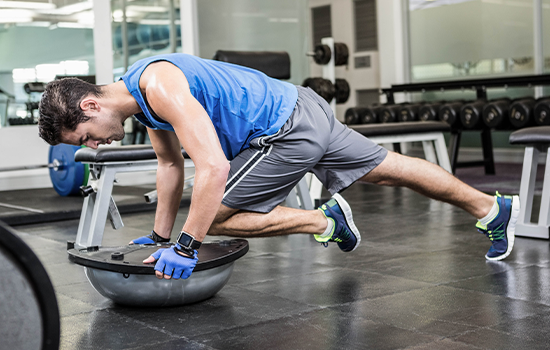
Do not treat handstands on an unstable device, weighted single-leg platform squats, jumps between unstable platforms, or planks with both ends of the body on separate moving balls as a routine next step. A mat does not make an uncontrolled fall harmless.

Progress the Task Before Changing the Surface

For a plank, first decide whether you can maintain the intended position while breathing comfortably. A longer hold, different leverage, or a more demanding stable-surface variation may provide the challenge you need without adding another moving surface.

For a squat, a controlled increase in appropriate resistance on stable ground is a different progression from balancing on a dome. Choose according to the goal. If balance makes you stop long before the target muscles are challenged, the unstable version may be limiting the strength work.

Three Progression Conversations

Balance: ask whether a modest reduction in hand support is appropriate while a secure handhold remains available. Keep the same equipment position and do not add an external weight at the same time.

Trunk control: compare an elevated stable plank, a floor variation, and a coach-selected dome-supported variation. Pick the version you can enter, hold, and exit deliberately. You do not need to continue until you collapse.

Conditioning: consider increasing appropriate work on a stable surface rather than moving faster on the balance trainer. Our bodyweight cardio guide offers a separate way to plan that part of training.

Change One Variable

Record the exercise, support used, repetitions or hold duration, and why the set ended. Then discuss one change. Increasing resistance, removing hand support, and extending the set together makes it difficult to judge which change created the problem.

For example, using slightly less hand support in a familiar balance task is an illustration of progression, not a requirement for every session. Keeping the same version can be appropriate when you are learning, tired, or returning after time away.

Set a Clear Stopping Point

End the attempt when you can no longer maintain the agreed movement or exit the setup with control. Stop for pain or dizziness. An exercise that repeatedly produces an uncontrolled step or fall needs a different setup, not a motivational challenge.

Persistent balance problems, recent injury, or neurological symptoms may need healthcare assessment. A personal trainer cannot determine their cause from an exercise attempt.

Choose a Useful Challenge

Read BOSU versus stable-surface strength training to separate those goals. For an overview of the equipment, start with our BOSU guide.

Book a Free Body Diagnostic to discuss your training experience and suitable coaching options at VIP Personal Fitness, 1620 Lemoine Ave, Suite 1, Fort Lee. The complimentary consultation is a fitness assessment, not medical clearance. Individual exercise needs vary.

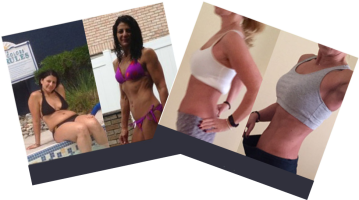
V.I.P 1 to 1 Fitness Center is hands down Fort Lee’s best kept secret! About a year ago I felt like I wasn’t able to keep up with my three kids. I knew it was time to make a change both physically and mentally. I contacted Brian Hernandez and have been training with Brian for less than 3 months. The compliments I began receiving about my shape, I had not heard in over a decade. Not to mention, the impact Brian has had on my overall well being is beyond descriptive. I have recommended Brian to 4 of my friends and they are as happy as I am with their results. All that I can say, if you are serious and committed to truly making a positive change, reach out to Brian and find out for yourself. This is the best decision I have ever made!!!!

BOSU Core Exercises: Planks, Bracing, and Practical Alternatives

BOSU Core Exercises: Planks, Bracing, and Practical Alternatives

A useful core exercise is one you can perform with the intended movement and an appropriate challenge. A BOSU changes the support surface, but it is not required to strengthen your trunk, and making a plank less stable does not automatically make it better.

The options below are examples to review with a coach. They are not treatment for back pain, a promise of visible abs, or a routine everyone should complete.

Begin With a Stable Reference Exercise

Before changing the surface, practice an appropriate stable version. For example, an elevated plank with hands on a securely fixed support may be easier to manage than a floor plank. Choose a height that allows a comfortable position, keep breathing, and end the attempt before you lose control.

The point is to establish what you can do now. Someone who cannot manage a stable version does not need an unstable one to make the exercise effective.

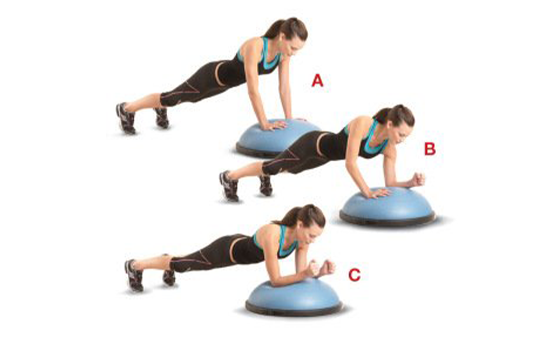
Option 1: A Supported Forearm Plank on the Dome

With the BOSU dome up and the platform on a nonslip floor, a coach may begin with your knees on the floor and forearms supported by the dome. Lean into the position only as far as you can control. Agree on the setup and exit before starting.

A brief controlled hold can be sufficient for practice. Moving to the toes is a separate progression, not a requirement. Do not deliberately rock the device, add a second ball under your feet, or continue until your position collapses.

Option 2: Seated Control With the Feet Supported

When appropriate, sitting on the dome with both feet on the floor can provide a supported balance task. A coach can help you find a comfortable position and decide whether a small weight shift adds anything useful.

Keeping the feet supported is not cheating. Lifting the feet, leaning back, and adding arm movements all change the task. There is no need to combine those changes or turn the exercise into a maximum-duration test.

Option 3: A Stable-Ground Alternative

A suitable side-plank variation, bridge, or controlled arm-and-leg movement on the floor may better match your goal. Your coach can adjust the support, range, and amount of work. A device-free exercise is not an inferior fallback.

For instance, a side-plank variation with bent knees may be worth discussing when a straight-leg version is too demanding. Shoulder comfort, the ability to get down and up, and your relevant medical guidance all affect the choice.

Choose What You Are Measuring

Record the exercise version, surface, assistance, and repetitions or hold duration. A longer hold achieved by changing position is not the same comparison as repeating the original task. Progress may be smoother movement or less unnecessary tension rather than more seconds.

Research on unstable-surface resistance training does not establish that unstable equipment is universally superior. Use the equipment because it serves the task, not because it looks advanced.

Keep Safety and Symptoms Separate From Effort

Follow your model’s instructions. BOSU discourages standing on the hard platform side. Use a clear area and an appropriate way to enter and leave the exercise.

A general plank recommendation cannot determine what is appropriate for someone with back pain, a recent operation, or another medical condition. Stop for pain or dizziness and seek individualized advice for persistent or unexplained symptoms.

Build a Plan Around Your Needs

Compare BOSU and stable-surface strength work, or read our bodyweight-training introduction. Then bring your questions to a Free Body Diagnostic at VIP Personal Fitness.

We are downstairs at 1620 Lemoine Ave, Suite 1, Fort Lee. The complimentary consultation helps discuss fitness goals and coaching options; it is not a medical diagnosis or rehabilitation appointment.

V.I.P 1 to 1 Fitness Center is hands down Fort Lee’s best kept secret! About a year ago I felt like I wasn’t able to keep up with my three kids. I knew it was time to make a change both physically and mentally. I contacted Brian Hernandez and have been training with Brian for less than 3 months. The compliments I began receiving about my shape, I had not heard in over a decade. Not to mention, the impact Brian has had on my overall well being is beyond descriptive. I have recommended Brian to 4 of my friends and they are as happy as I am with their results. All that I can say, if you are serious and committed to truly making a positive change, reach out to Brian and find out for yourself. This is the best decision I have ever made!!!!

BOSU vs. Stable Surfaces for Strength Training

BOSU vs. Stable Surfaces for Strength Training

Adding a BOSU to a strength exercise changes the task; it does not automatically improve it. If balance becomes the main limitation, you may be practicing stability while reducing the load or work you can perform. That can be a deliberate choice, but it should be a choice rather than a default upgrade.

This guide helps you discuss the trade-off with a coach at VIP Personal Fitness in Fort Lee. Neither a balance trainer nor a conventional weight is the best tool for every person and goal.

First Ask What the Set Is For

For a strength-focused squat or press, a stable floor, bench, or suitable machine makes it easier to standardize the setup and compare resistance over time. For a balance task, changing the support surface may be part of the intended challenge.

A systematic review of unstable-surface strength training found that outcomes depended on the comparison and population; it did not establish general superiority over stable-surface training. “More unstable” is not a reliable shortcut to “more effective.”

Compare Three Familiar Movements

Squat: on stable ground, a coach can adjust depth, assistance, and resistance for the strength task. A dome-supported version adds a balance demand and may limit the resistance you can manage. Do not infer that using a smaller weight on the dome provides the same strength stimulus.

Press: a suitable stable support lets you focus on the pressing movement and the way you get the weights into position. An unstable support introduces additional setup and control demands. It is not automatically a better choice because it looks more challenging.

Curl or overhead exercise: standing on a balance trainer is not required to train the arms. If your aim is to work the arms through an appropriate range, keep that purpose clear rather than combining tasks that compete for attention.

Use Separate Blocks When the Goals Differ

An illustrative session could include a short supported balance task followed by stable-surface strength work. This allows each task to have its own progression and stopping point. It is not a prescribed VIP session or a requirement to use balance equipment.

Similarly, a trunk-control exercise can be selected separately from the main lifting exercise. You do not need to make every movement train every quality at once.

Keep the Safety Limits Clear

BOSU advises against standing on its hard platform side. Follow the instructions for your model and keep the area clear. This article does not recommend weighted squats or overhead lifting while balancing on that platform.

Do not copy your stable-surface working weight into an unfamiliar unstable setup. Have a coach select an appropriate exercise first, and stop when you cannot control the movement or exit it deliberately. Pain and dizziness are reasons to stop and reassess.

Track Like With Like

Record the exercise, support surface, assistance, resistance, and repetitions. A set performed with a different support is not a direct continuation of the same strength test. Compare the same task under similar conditions before deciding that you became stronger or weaker.

When progression stalls, ask what limited the set: the intended muscles, balance, unfamiliar technique, or discomfort. The answer helps determine whether to keep the movement, simplify it, or use a different tool.

Choose Coaching, Not Equipment Hype

Explore semi-private personal training at VIP Personal Fitness, or discuss our coached group options. Book a Free Body Diagnostic to talk about your goals and starting point.

Find us downstairs at 1620 Lemoine Ave, Suite 1, Fort Lee. The complimentary consultation is separate from ongoing training and is not medical diagnosis or rehabilitation. Individual needs vary.

V.I.P 1 to 1 Fitness Center is hands down Fort Lee’s best kept secret! About a year ago I felt like I wasn’t able to keep up with my three kids. I knew it was time to make a change both physically and mentally. I contacted Brian Hernandez and have been training with Brian for less than 3 months. The compliments I began receiving about my shape, I had not heard in over a decade. Not to mention, the impact Brian has had on my overall well being is beyond descriptive. I have recommended Brian to 4 of my friends and they are as happy as I am with their results. All that I can say, if you are serious and committed to truly making a positive change, reach out to Brian and find out for yourself. This is the best decision I have ever made!!!!