
Archives by date

You are browsing the site archives by date.

How to Stay Consistent With Semi-Private Training

How to Stay Consistent With Semi-Private Training

A booked workout helps only when the appointment fits your life. Semi-private training gives you a defined coaching session, but it cannot remove a recurring work conflict, shorten your commute, or guarantee motivation. A useful consistency plan addresses those practical obstacles before they become repeated missed visits.

VIP Personal Fitness’s semi-private sessions last 45 minutes and include two to four clients. Here is an illustrative four-week planning approach you can discuss with the team; it is not a required VIP protocol or a promise of a particular result.

Before Week One: Choose Times You Can Protect

Open your calendar for the coming month. Identify the days that usually work, then mark predictable exceptions. A session that conflicts with a regular meeting is not a dependable choice simply because you hope the meeting will end early.

Include travel and changing time. For a hypothetical twice-weekly plan, eight 45-minute appointments equal six hours of scheduled training across four weeks. Confirm the actual available slots and package terms before registering. Three weekly visits may be appropriate for another person; the purpose is a workable commitment, not the smallest possible number.

Week One: Make Arriving Easier

Choose one repeatable preparation cue. You might put your workout clothing with your work bag the evening before, or check your appointment time while planning the next day’s commute. Select the cue you can actually repeat rather than building an elaborate routine around getting ready.

Tell your coach what makes starting difficult. Not knowing how a session works calls for explanation; uncertainty about your strength calls for an appropriate starting exercise. Neither problem is solved by being told to try harder.

Week Two: Record What Happened

Compare scheduled and completed appointments. Completing six of eight planned visits is 75% attendance. That calculation is information, not a grade on your character. Note what prevented the other two visits and whether the same conflict is likely to happen again.

Also record one training detail worth reviewing, such as the version of a squat you practiced or the resistance used for a row. Better information makes the next coaching conversation more useful than simply deciding whether you felt exhausted.

Week Three: Test Your Backup Plan

Know how to contact the team and what your booking and cancellation terms allow. A backup time is helpful only when it is actually available. Do not assume that a missed visit will be credited, that a trainer will automatically follow up, or that another format is interchangeable with your package.

When travel or a busy period prevents a visit, an agreed bodyweight backup routine or a suitable walk may help maintain a habit. It does not necessarily replace the exercises or coaching of the missed appointment. Do not double the next workout as punishment.

Week Four: Review the Fit, Not Just the Scale

Ask four questions: Did the schedule work? Did you understand what to do? Could you get useful coaching? What did your training records show? Then choose one adjustment: a different time, a clearer exercise explanation, or a change in workload when appropriate.

A four-week review is a checkpoint, not a transformation deadline. Attendance can improve while a body-composition goal still needs more time or a broader review. Avoid changing the schedule, exercises, food intake, and extra activity simultaneously without understanding the reason.

Use the Group for Support, Not Comparison

Training alongside other people can be enjoyable, but you are not required to match their weights, speed, or experience. Tell the coach when you need clarification rather than hiding confusion to keep up. Encouragement should help you follow an appropriate plan, not pressure you to ignore discomfort.

Someone who prefers a different environment can compare VIP’s training formats. The right setting is the one that provides suitable coaching and a commitment you can maintain.

Start With Your Real Schedule

Book a Free Body Diagnostic and bring the days and times that realistically work for you. The complimentary 30-minute consultation includes an InBody assessment and discussion of your fitness goals and starting point.

VIP Personal Fitness is downstairs in Suite 1 at 1620 Lemoine Ave, Fort Lee. There is no obligation to purchase, and no need to have your entire routine figured out before that conversation.



Semi-Private Personal Training in Fort Lee: How It Works

Semi-Private Personal Training in Fort Lee: How It Works

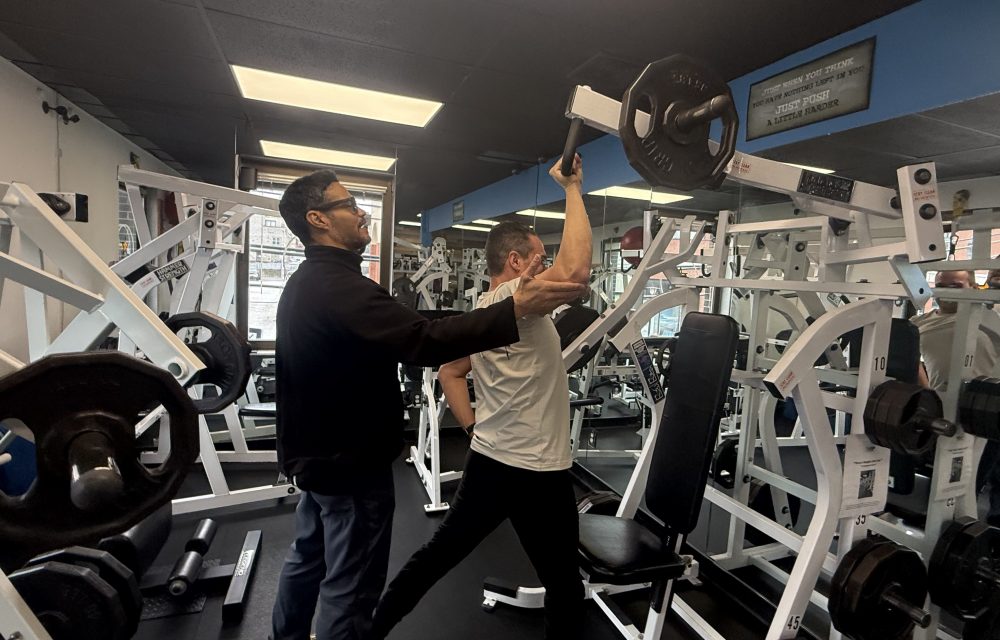
Semi-private personal training at VIP Personal Fitness means 45-minute coached sessions with two to four clients. You share the training environment and the trainer’s attention, while receiving guidance that takes your starting point and goals into account. It is a different service from a gym-only membership, a large exercise class, or a private appointment.

Our studio is downstairs at 1620 Lemoine Ave, Suite 1, Fort Lee. This guide explains what to consider before choosing semi-private training and how it compares with the other VIP programs.

What Does Personalized Coaching Mean in a Shared Session?

The important question is not whether everyone holds the same piece of equipment. It is whether the exercise, resistance, range of motion, and amount of work are appropriate for each person. Two clients might practice a similar movement while using different versions or different loads.

For example, one person could practice sitting down to and standing up from a box, while another performs a loaded squat. That is an illustration of how coaching can adapt a movement, not a fixed VIP workout or a promise that every participant always follows a completely separate program.

During your consultation, discuss the kind of feedback you need. Someone who needs uninterrupted assistance throughout every exercise may be better served by private training or by clinical rehabilitation, depending on the situation. A smaller group does not remove every limitation of sharing a trainer.

How a 45-Minute Session Can Be Organized

A useful session needs room for a check-in, preparation, selected exercises, rest, and coaching. An illustrative structure is five minutes to check in and warm up, 35 minutes for coached exercise and necessary rest, and five minutes to record the session and discuss the next step. Actual timing and exercise selection depend on the participants and the session.

The purpose is not to fill every second with movement. Learning a new exercise, adjusting equipment, or recovering between demanding sets can be a productive part of training. Moving faster is not automatically a better use of the appointment.

What Progress Should You Look For?

Choose a goal you can review: completing your planned visits, performing a familiar movement with more control, or gradually increasing appropriate training work. Record enough information to make a useful comparison rather than relying on how sweaty a session felt.

For strength goals, compare the same exercise under similar conditions. For a body-composition goal, discuss the broader plan and how measurements will be interpreted. An InBody reading adds information, but one measurement cannot explain everything about your progress or diagnose a health condition.

The American College of Sports Medicine’s resistance-training guidance emphasizes consistency and tailoring the program to individual goals. It does not establish that one group size guarantees better results for everyone.

How Semi-Private Differs From the Other VIP Options

Semi-private: 45-minute sessions for two to four clients, with personalized coaching in a shared setting. Strength Camp: a 30-minute coached small-group format. Boot Camp: a 45-minute coached group workout. All three belong to VIP Personal Fitness.

For dedicated one-to-one attention, VIP Fitness Center’s private 30-minute training is upstairs in Suite 2. Choose the level of attention and the setting you need; do not assume that the longest appointment or smallest group is automatically the best match.

Our training-format comparison explains these trade-offs in more detail.

Questions to Settle Before Registering

Confirm which available times fit your week, how your starting exercises will be chosen, what your package includes, and how booking and cancellation terms work. Ask how progress is recorded and when you will review it. Do not assume that bringing a friend is required, that a particular slot is available, or that every service has the same billing arrangement; confirm your actual options with the team.

Two weekly 45-minute appointments represent 90 minutes of scheduled training, before travel and changing. Three represent 135 minutes. Use the real time commitment, current package information, and your training needs to choose a workable schedule.

Start With a Free Body Diagnostic

Book your Free Body Diagnostic at VIP Personal Fitness. The complimentary 30-minute private consultation includes an InBody body-composition assessment and a conversation about your goals, experience, schedule, and suitable training options.

The consultation is separate from a semi-private workout and carries no obligation to purchase. It is a fitness assessment, not a medical diagnosis. Come with your questions; you do not need a complete training plan before your first visit.