Personal Training

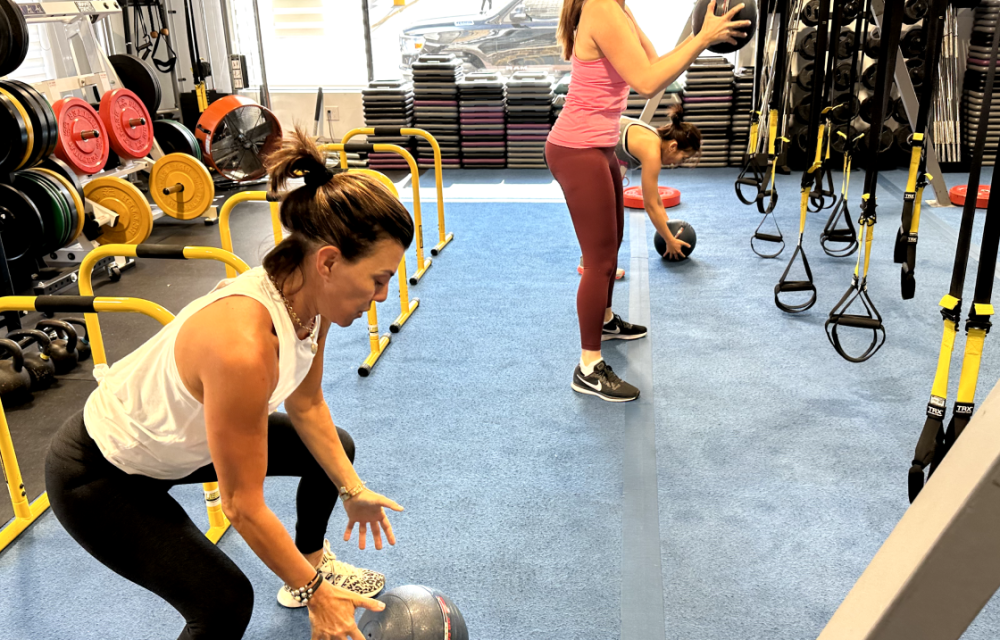
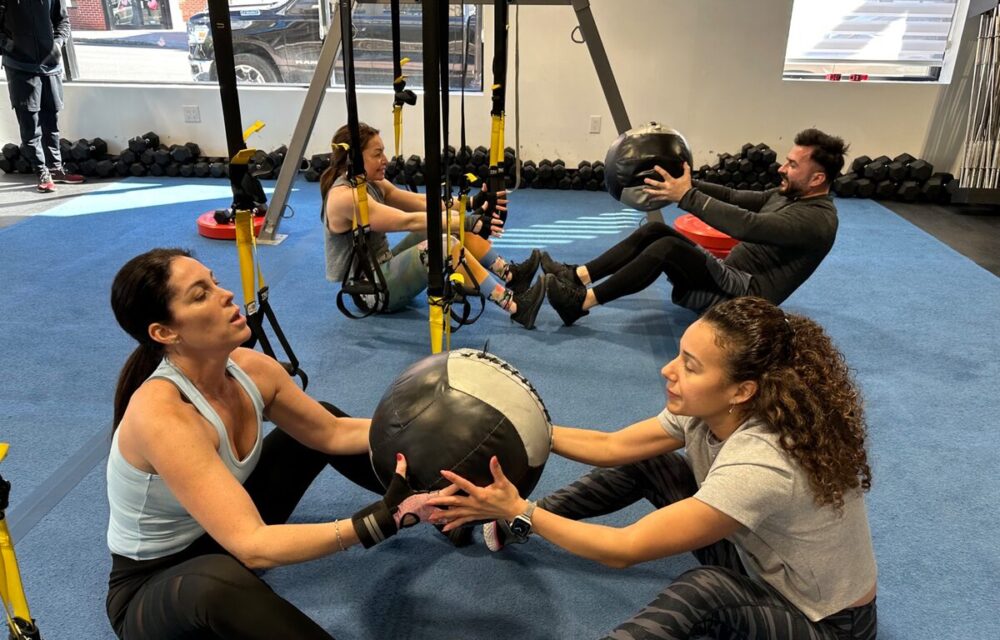
Partner medicine-ball exercises at VIP Personal Fitness in Fort Lee, NJ.

Starting Small-Group Training With a Friend: Make It Work for Both of You

Training with a friend can make a new environment feel more familiar, but a shared start still needs two individual plans. You may enjoy the same class while using different exercises, resistance, or weekly schedules. Friendship is a reason to explore the option—not proof that one package or workout fits both people.

At VIP Personal Fitness in Fort Lee, friends can ask about coached group training or the smaller semi-private format. Here is how to make the conversation practical before either of you registers.

Start With Two Goals, Not One Agreement

Each person should explain what they want help doing. One might be returning after a long break; another might want more structure around existing strength work. You do not need identical goals to share a training environment, but the coach needs to understand both starting points.

A useful opening conversation is: “We would like to train at similar times. Here is what each of us needs from the coaching.” Avoid answering every question for your friend or turning their goal into your own.

Choose the Format Before Coordinating the Calendar

VIP Personal Fitness offers 30-minute Strength Camp and 45-minute Boot Camp group workouts. Semi-private sessions last 45 minutes with two to four clients. A semi-private appointment is not automatically an exclusive session for the two of you; confirm how the available session is organized.

If one person wants uninterrupted individual attention, separate private appointments may be a better fit. VIP Fitness Center provides that service upstairs in Suite 2. Our program comparison explains the options without treating one as the correct answer for every pair.

Confirm Each Person’s Registration

Ask about current availability, the appropriate first appointment, and the registration process for each participant. Do not assume a package can be shared, a guest can attend without booking, or joining together creates a discount. Those details need an actual agreement.

Each person should be comfortable with their own purchase and relevant terms. The program should make sense for you even if your friend chooses a different frequency. A shared ride does not have to mean a shared financial commitment.

Agree on What Happens When One Person Cannot Attend

The biggest practical weakness in a buddy plan is making attendance depend entirely on the other person. Before starting, decide whether you will normally attend your confirmed session even when your friend has a conflict.

For example, two friends might aim to attend together on Tuesdays but keep a second independent training opportunity. That is an illustrative arrangement, not a promise that those times are available. Build the plan around confirmed appointments and follow the booking and cancellation terms that apply to you.

Encourage the Plan, Not Competition

Support can sound like “Are you coming to our booked session?” rather than “You should use the same weight as me.” Resist the temptation to coach your friend through a movement the trainer has modified. Ask for clarification when their version looks different.

Different resistance or rest does not tell you who is trying harder. The point is to complete an appropriate task. Our bodyweight guide shows why even exercises with the same name can have very different starting demands.

Keep Private Information Private

Your friend does not need your body-composition numbers, health history, or financial details to support your attendance. Decide what you are comfortable sharing. A consultation should give each person room to explain relevant restrictions and preferences without pressure.

Choose progress measures individually. One person may be working on a familiar strength task while another prioritizes attending regularly. Comparing those results as a competition can distract both of you from the reason you joined.

Review Whether the Shared Start Is Helping

After several sessions, ask whether training together makes arrival easier, whether you both get useful coaching, and whether either person is holding back a needed scheduling change. Keep what works and adjust the rest. You can remain supportive friends while choosing different classes.

Book your Free Body Diagnostic and mention that a friend is also interested. Ask the team how each of you should arrange a consultation and explore suitable times. The complimentary 30-minute consultation includes an InBody assessment and carries no obligation to purchase.

Visit VIP Personal Fitness downstairs at 1620 Lemoine Ave, Suite 1, Fort Lee, or call 201-886-7100. No referral promotion or complimentary guest workout is implied by this article.
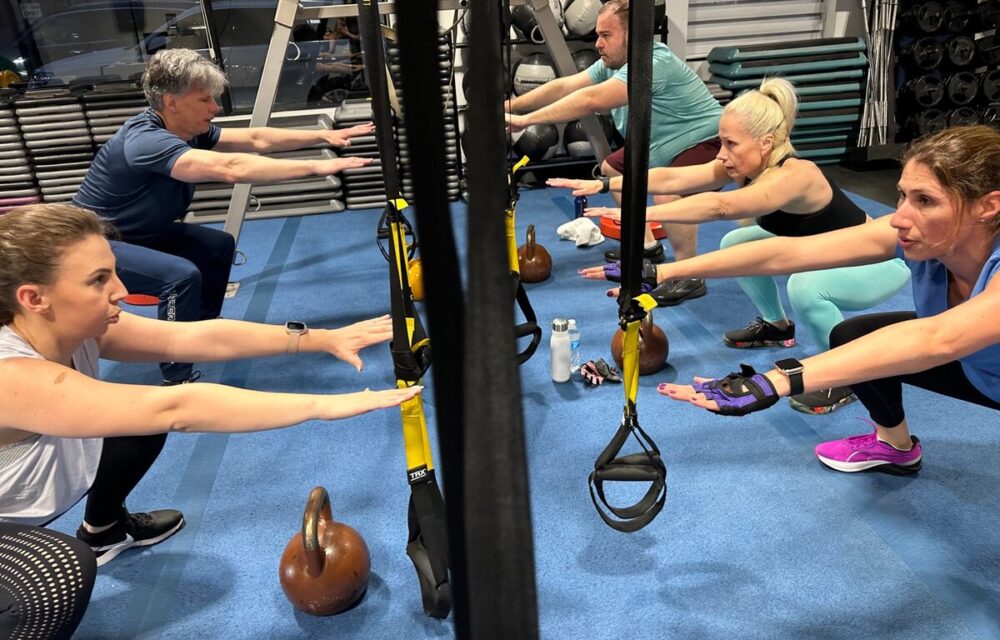
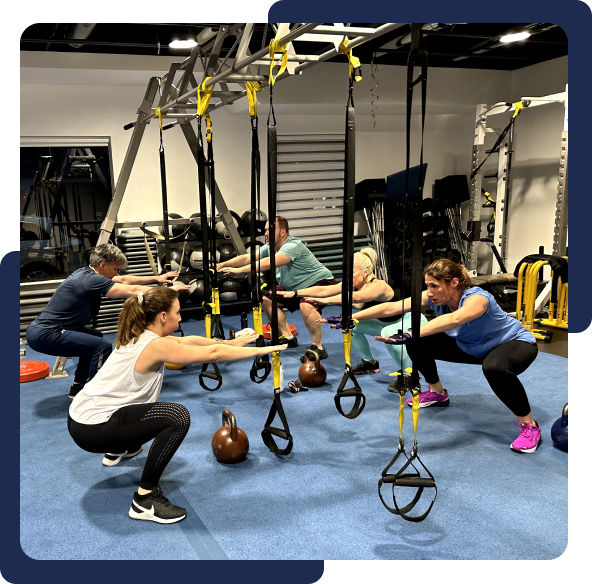
Group bodyweight squats at VIP Personal Fitness in Fort Lee, NJ.

Can You Do Boot Camp Without Jumping? Questions to Ask First

Not wanting to jump does not automatically rule out coached group training. It does mean you should ask about the actual session and suitable alternatives before registering. A class name alone cannot tell you whether the exercises will meet your needs.

VIP Personal Fitness offers 45-minute Boot Camp workouts in Fort Lee. This guide explains how to discuss impact and exercise choices with the team. It does not promise that every session can accommodate every restriction or that removing jumping makes an exercise medically appropriate.

Separate Impact From Effort

Jumping is one way to make a task more demanding, but it is not the only way. A controlled strength exercise or sustained movement can still require effort without repeated jumps. Conversely, an exercise described as low impact can still be tiring or uncomfortable for a particular person.

The CDC’s guidance on activity intensity uses the talk test to describe aerobic effort. At moderate intensity, you can generally talk but not sing. That is a different question from whether your feet leave the floor. Your appropriate starting effort may be lower.

Tell the Coach What You Are Avoiding and Why

“I prefer not to jump” and “my clinician has restricted impact after an injury” require different conversations. Share relevant guidance privately and describe any pain, balance concern, or difficulty with rapid transitions. Do not assume the trainer can infer the reason from watching one movement.

If you have new or unexplained symptoms, obtain appropriate assessment. A fitness consultation is not medical clearance, and a trainer should not diagnose the cause of discomfort by testing how many exercises you can tolerate.

Ask About the Goal of the Original Exercise

A useful substitute should serve an appropriate purpose, not simply look similar. If the task is aerobic conditioning, a controlled step or marching variation may be worth discussing. If the goal is a particular strength movement, a different resistance exercise may fit better.

As examples, a coach might compare jumping jacks with suitable side steps, or a rapid floor transition with a standing task. Those are possibilities, not universal swaps or a required VIP workout. The available space, equipment, and your abilities affect the choice.

Adjust More Than the Exercise Name

Range, pace, resistance, support, repetitions, and rest can all change the task. Replacing a jump with a step but demanding the same fast pace may leave the original problem unresolved. Ask how much work to complete and when to pause.

You should also understand how to enter and leave the setup. A stable handhold or raised support can matter more than a label such as beginner or advanced. Our no-jumping bodyweight cardio guide gives examples of adjusting movement and recovery without treating a timer as a command to rush.

Consider the Attention You Need

A group class shares the coach’s time. If your restrictions require frequent one-to-one assistance, discuss whether semi-private sessions would be more practical. At VIP Personal Fitness, those sessions last 45 minutes with two to four clients.

Dedicated private coaching is offered separately at VIP Fitness Center upstairs. Neither format replaces rehabilitation. Choose according to the support you need rather than assuming that the most intense-sounding program delivers the best result.

Evaluate Your Experience After Starting

Did the instructions make sense? Could you perform your agreed alternatives without feeling pressured to imitate the group? Were you able to ask for help before changing an exercise? Those observations tell you more about fit than whether you completed exactly the same workout as another participant.

Record the versions you used and discuss how they felt at the next visit. Progress can mean repeating a suitable task with better control before adding more work. Stop for pain, dizziness, or other concerning symptoms; completion is not more important than responding appropriately.

Ask About Your Options Before You Join

Book your Free Body Diagnostic and tell us what you need from a group workout. We will discuss your goals, experience, and available coaching formats. The complimentary 30-minute consultation includes an InBody assessment and carries no purchase obligation.

VIP Personal Fitness is downstairs at 1620 Lemoine Ave, Suite 1, Fort Lee. For current availability or questions about getting started, call 201-886-7100.


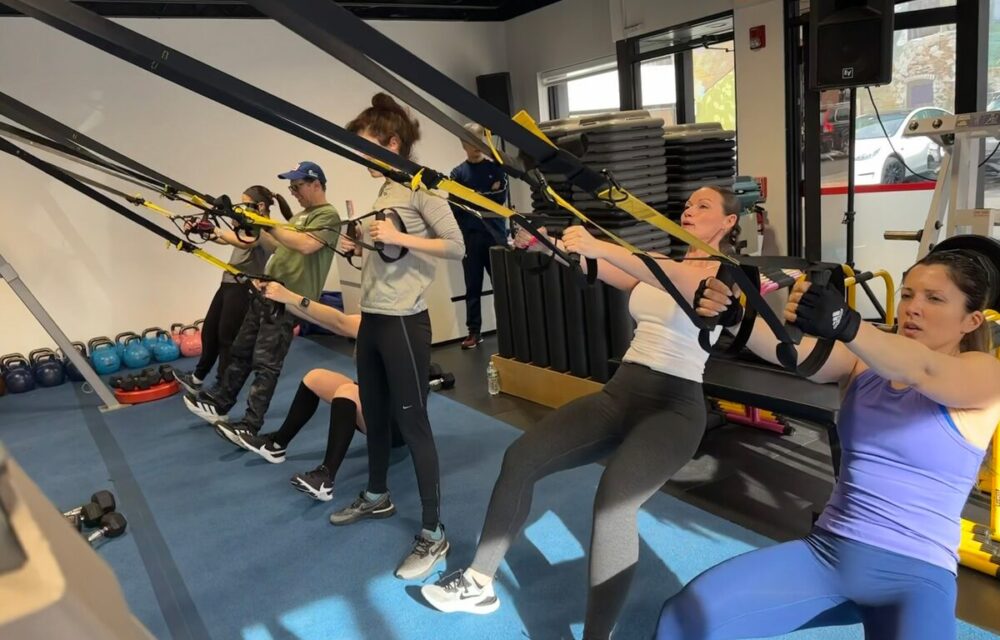
Group suspension training at VIP Personal Fitness in Fort Lee, NJ.

Your Holiday Class Calendar: Plan Training Around Travel

A useful holiday training plan starts with the dates you will actually be available. Before deciding to train more, train less, or wait until January, put your work events, travel, and family commitments on the same calendar as your workouts.

At VIP Personal Fitness, the question is how our coached group or semi-private sessions fit that real calendar. My recommendation is to plan the interruptions as carefully as the regular weeks. That makes it easier to distinguish a temporary change from a routine that has quietly disappeared.

Mark Three Types of Weeks

Label the weeks ahead as regular, restricted, or away. A regular week resembles your normal routine. A restricted week includes events that remove some of your usual opportunities. An away week may not allow studio visits at all.

For example, a person who usually trains Tuesday and Friday might be available for only Tuesday during a travel week. That observation should lead to a conversation about the available options, not an automatic commitment to make up every missed minute later. The example is a planning exercise, not a change to package or cancellation terms.

Confirm the Holiday Timetable Before Booking

Ask which sessions will actually run during holiday weeks. Regular opening hours do not prove that every usual class or trainer appointment is available on a particular date. This article does not announce VIP holiday hours or guarantee additional sessions.

For a current client, confirm the format covered by your plan, remaining visits where applicable, and booking procedures. Strength Camp is 30 minutes; Boot Camp and semi-private sessions are 45 minutes. A shorter class can solve a time problem only when it is available and fits your training arrangement.

Choose a Small Set of Appointments to Protect

Put confirmed workouts into your calendar with arrival and travel time. Look for recurring conflicts before assuming you can simply leave work earlier. Tell the team about a predictable change while there is still time to discuss it.

When a week is unusually crowded, choose an appropriate reduced plan with your coach rather than writing an unrealistic schedule. Missing one appointment does not erase the value of another completed session. Equally, a reduced schedule should be a deliberate adjustment rather than an assumption that you no longer need a plan.

Agree on a Familiar Backup for Time Away

A backup could be a suitable walk or a few familiar bodyweight movements that you have already practiced. Ask what is realistic given the space, equipment, and time you will have. An unfamiliar hotel exercise station is not a reason to improvise a demanding workout.

Our bodyweight backup guide explains a short planning example and its limits. A home routine can preserve some practice without reproducing the resistance or coaching of a studio appointment. It also does not create a credit or alter the terms of a missed booking.

Keep Celebration and Exercise Separate

Do not add a punishing circuit to compensate for a holiday meal. The useful question is what activity fits the next day, not how much exercise you think you owe. Plan ordinary meals and appropriate movement around your circumstances instead of making a social event a test of discipline.

Illness, unsafe travel conditions, pain, or other health concerns may call for postponing exercise. Discuss relevant symptoms with a healthcare professional rather than pushing through simply to preserve an attendance streak.

Book the Return Before the Break Becomes Open-Ended

Before leaving, identify your first realistic week back. Request an available appointment and confirm it through the normal process. On returning, tell your trainer what activity you actually completed and anything that changed.

A useful return review covers the schedule, your current tolerance, and one next training priority. You do not have to start from scratch, but you should not assume that every previous workload still fits. Our consistency guide offers a way to review attendance without an all-or-nothing approach.

Plan the Season With VIP Personal Fitness

Current clients can call 201-886-7100 to discuss their actual holiday availability and training arrangements. Considering joining? Book a Free Body Diagnostic and bring your holiday calendar.

The complimentary 30-minute consultation includes an InBody assessment and a conversation about suitable training options. Visit us downstairs at 1620 Lemoine Ave, Suite 1, Fort Lee. There is no obligation to purchase or a requirement to wait for a perfect month before asking about a workable start.


Small-Group Training Costs in Fort Lee: What Are You Paying For?

Small-Group Training Costs in Fort Lee: What Are You Paying For?

To compare small-group training costs, start by identifying what the quoted price actually includes. Access to equipment, admission to a class, and a smaller session with personalized coaching are different purchases. The lowest headline price may not represent the support you are looking for.

At VIP Personal Fitness in Fort Lee, your decision should connect the coaching format with the appointments you can realistically attend. This guide provides a practical comparison method. It does not quote an unverified local average or an expired VIP promotion.

Compare the Service Before the Price

VIP Personal Fitness offers 30-minute Strength Camp, 45-minute Boot Camp, and 45-minute semi-private training for two to four clients. These options differ in length and coaching arrangement. An equipment-only membership is not the same service, and we do not sell gym-only access as the equivalent of coached training.

Ask how instruction, exercise adjustments, and progress review work in the option you are considering. A smaller group can allow a different coaching experience, but it still shares the trainer’s attention. Our training-format comparison explains the differences.

Use the Total Price and the Usable Visits

For a defined package, divide the total price by the included sessions to understand the quoted price per session. Then separately estimate the sessions you expect to attend. That second calculation is for planning; it does not change the package’s contractual value or policies.

For example, imagine two hypothetical programs with the same total price. One includes eight coached visits you can attend. Another advertises twelve visits, but its available times mean you can attend only six. The larger advertised count is not automatically better value for your actual week.

These are arithmetic examples, not current VIP packages. Obtain the actual offer before making a purchase decision.

Check the Billing Interval

Ask whether the offer is a fixed session package, recurring access, or an installment arrangement for a defined purchase. Confirm payment dates and the total amount you are committing to. Calendar-monthly and every-four-weeks billing are different intervals; compare them on the same time basis.

Do not assume a general article describes the terms of your agreement. Ask about any expiration, renewal, cancellation, freeze, or transfer conditions relevant to the specific option. Request written clarification when a term is unclear rather than filling in the gap from another client’s experience.

Price the Time Commitment Too

Twice-weekly 30-minute classes use one hour of appointment time per week. Twice-weekly 45-minute sessions use ninety minutes. Add travel and changing to both. The extra time may be useful when it fits your goals and coaching needs; it is not proof that the longer format must be better.

Map the available sessions onto the coming four weeks. A manageable program you can use consistently is a more sensible purchase than an ambitious plan that repeatedly conflicts with work or family responsibilities.

Ask What Would Make You Change Formats

Suppose a group class provides the instruction and structure you need. Paying for a different format simply because it sounds more premium may add little value. On the other hand, needing repeated individual feedback is a valid reason to discuss semi-private training.

Ask what support is included now and what would require a different service. Nutrition treatment, medical rehabilitation, and unlimited access to a trainer should not be assumed to come with a fitness class.

Get a Current Recommendation, Not a Guess

For current VIP Personal Fitness prices and availability, call 201-886-7100 or book your Free Body Diagnostic. Bring the days you can attend and whether your priority is a shorter group session, a longer group workout, or a smaller coaching environment.

The complimentary 30-minute consultation includes an InBody assessment and a discussion of suitable programs. It is separate from a workout and carries no obligation to purchase. You should leave the pricing conversation understanding the format, the financial commitment, and the next scheduling step.

VIP Personal Fitness is downstairs at 1620 Lemoine Ave, Suite 1, Fort Lee, NJ 07024. The goal is not to sell you the biggest package; it is to help you choose a commitment that matches a useful training plan.


Can Beginners Join Small-Group Training? How Modifications Work

Can Beginners Join Small-Group Training? How Modifications Work

A beginner does not need to perform the same version of every exercise as an experienced classmate. The useful question is whether the coach can provide an appropriate starting task and enough guidance for you to understand it.

At VIP Personal Fitness in Fort Lee, we offer coached group workouts and smaller semi-private sessions. When discussing either option, ask how the actual session will accommodate your starting point. “All levels” is less informative than a clear explanation of what you will do.

A Modification Changes the Task, Not Your Status

A modification is an adjustment to an exercise or the amount of work. That might mean using a higher support for a push-up, reducing resistance, choosing a comfortable range, or taking additional recovery. It is not a label that says you are behind the group.

My recommendation is to identify why a movement needs adjusting. Is the exercise unfamiliar? Is balance distracting you? Is the intended resistance too demanding? Is there discomfort that needs assessment? Those are different questions, so they should not all produce the same answer.

Example 1: Change the Starting Position

A floor push-up may be too demanding to practice well. A securely supported wall or incline version can offer another way to learn a pushing movement. The support must be stable, and the height should allow the intended task with control.

Someone else may need an entirely different pressing exercise. These are coaching examples, not interchangeable treatments for wrist or shoulder pain. For more starting options, see our bodyweight-training introduction.

Example 2: Adjust Resistance and Range

Two people can perform a squat pattern with different loads and depths. One may use a suitable box or assistance; another may hold a weight. Both should understand where the movement starts, how far to move, and how to finish.

Do not choose a weight solely because the person beside you uses it. Equally, you do not have to keep an exercise easy forever. Once you can repeat the intended task, discuss an appropriate progression rather than adding difficulty just to match the room.

Example 3: Adjust the Work-and-Rest Pattern

A class timer organizes the session, but it does not replace individual judgment. During a work period, your coach may ask you to complete a manageable amount of controlled work and then recover. Another participant may use a different amount.

Ask what you should do when you finish or need a pause. Moving faster to fill every second can turn a useful task into an uncontrolled one. You should know how to stop and put equipment down before trying to extend the effort.

Know When a Smaller Setting Makes More Sense

Group coaching has limits because attention is shared. If you repeatedly need an explanation before each attempt or substantial assistance throughout a movement, discuss a different starting format. VIP’s semi-private sessions include two to four clients for 45 minutes. Private one-to-one appointments are available separately upstairs at VIP Fitness Center.

Neither format substitutes for clinical rehabilitation or medical clearance. Bring relevant restrictions and seek healthcare guidance for new or unexplained symptoms. The objective is a suitable environment, not proving that you can tolerate the busiest class.

Ask These Questions Before Registering

Ask how you will learn the first exercises, how to request a different version, and what the trainer expects you to do while helping someone else. Describe any difficulty getting down to the floor, handling equipment, or following fast transitions.

You can also ask which available times are appropriate for your experience. Do not assume every class has the same demands or that an advertised session can accommodate every restriction. Our semi-private checklist can help organize the conversation.

Judge Your Start by Clarity and Control

After the first few sessions, consider whether you understand your exercise versions and can get useful feedback. Record a variation or resistance so the next comparison means something. Learning a repeatable movement is a more useful early goal than trying to be the most tired person in the room.

Book your Free Body Diagnostic and tell us you are starting as a beginner. We will discuss your goals, experience, and suitable coaching options at VIP Personal Fitness, 1620 Lemoine Ave, Suite 1, Fort Lee. The consultation is complimentary and separate from training, with no obligation to purchase.


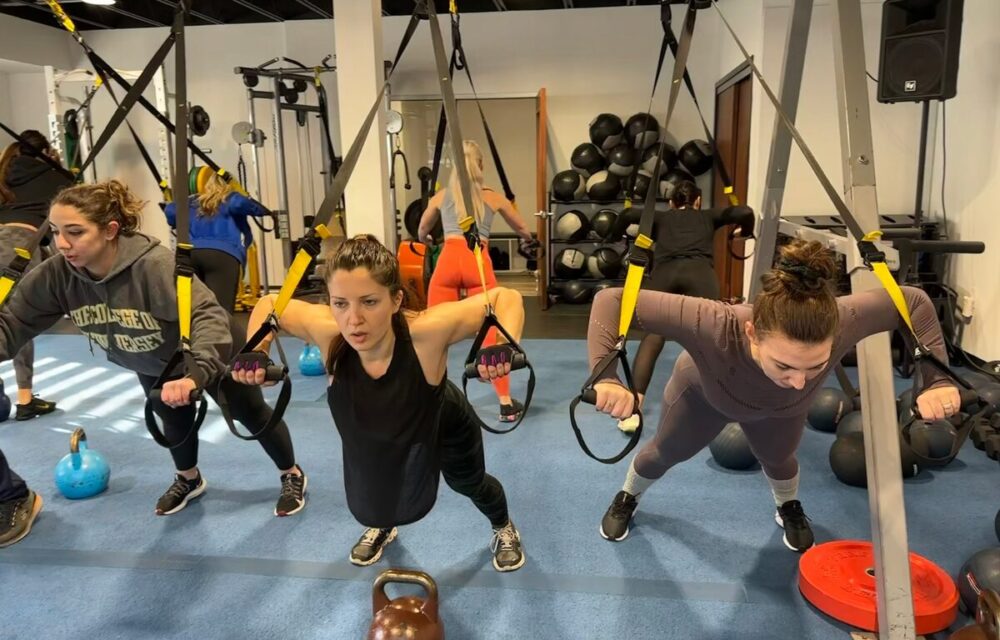
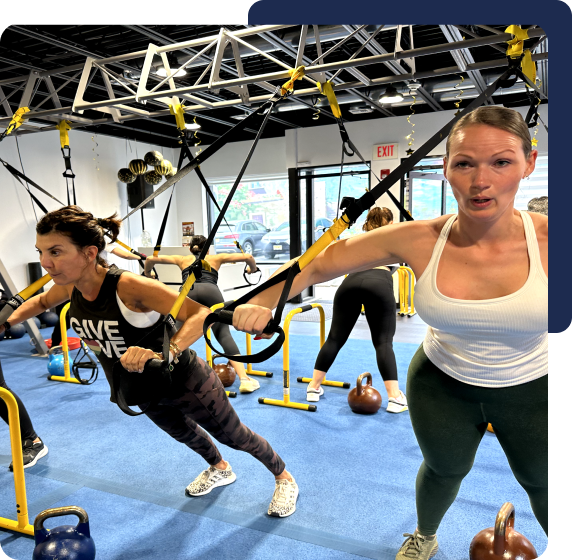
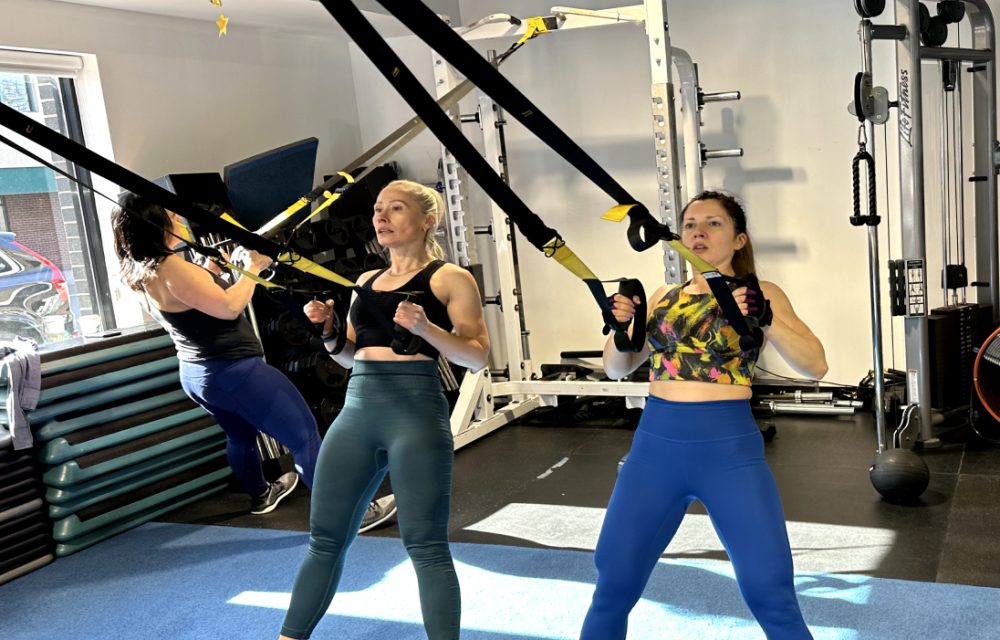
Suspension chest presses during group training at VIP Personal Fitness in Fort Lee, NJ.

30-Minute Strength Camp in Fort Lee: Who It Fits and How to Start

Thirty minutes can be a useful training appointment when the session has a clear purpose and the exercises fit the person. The advantage of a shorter class is a manageable commitment—not a promise to compress every benefit of a longer workout into half the time.

Strength Camp is VIP Personal Fitness’s 30-minute coached small-group format in Fort Lee. It is worth considering when you want structured strength work and shared coaching without planning your own session from scratch.

Who Should Consider Strength Camp?

Start with what you need from the appointment. You might want help choosing exercises, feedback while learning them, or a scheduled reason to put strength work into the week. A person who enjoys a shared training environment may find that combination more useful than another equipment-only membership.

Consider the trade-off too: the trainer assists more than one participant. If you need continuous individual explanation or assistance, ask whether semi-private or private coaching would be a better starting point. A class’s short duration does not tell us whether its demands match your current ability.

What Makes a Short Session Worthwhile?

Look for a small number of purposeful tasks, clear instructions, an appropriate workload, and enough rest to perform the selected movements. Time spent learning equipment or resting between efforts is not automatically wasted time.

For an illustrative 30-minute structure, allow five minutes for a check-in and preparation, twenty minutes for selected exercises and recovery, and five minutes to finish and record useful notes. This is a planning example, not VIP’s fixed class protocol. The actual session may be organized differently.

The goal is to avoid unnecessary delays without turning every exercise into a race. If you do not understand a movement, ask before starting it.

Understand What the Thirty Minutes Does Not Include

Your door-to-door commitment includes travel, arrival, and changing as well as the class. Test that entire block against a real workday. A 30-minute appointment that repeatedly conflicts with your commute is not a time-saving solution.

It is also one part of your activity plan. CDC guidance combines muscle-strengthening activity on at least two days with weekly aerobic activity. Do not automatically count a whole strength class as aerobic exercise; the activities, instruction, and rest all matter.

Choose Your Frequency From the Calendar

As an arithmetic example, two weekly Strength Camp visits total 60 minutes of class time; three total 90 minutes. Across four weeks, those plans involve eight or twelve appointments. Neither example guarantees a result or establishes which frequency you personally need.

Discuss how the available times fit with other activity and recovery. More visits may be useful when they serve a clear goal. They are less useful when you book them on days you regularly cannot attend. Our walking and strength-training guide offers another way to think about the full week.

Compare the Actual VIP Options

Strength Camp is 30-minute group training. Boot Camp is a 45-minute coached group workout. Semi-private personal training is 45 minutes with two to four clients. All are offered through VIP Personal Fitness downstairs in Suite 1.

VIP Fitness Center’s upstairs service is 30-minute private one-to-one training. It has the same appointment length as Strength Camp but a different trainer-to-client arrangement. Compare attention, program fit, availability, and current price—not minutes alone. Our format comparison explains those differences.

Know What to Review After Starting

Keep simple notes about attendance and a few familiar exercises. Do you understand their setup? Can you describe what resistance or variation you used? Is the coach helping you make sensible next-step decisions?

Progress might begin with more consistent attendance or better control of a movement. It does not require exhaustion at every class. Tell the team when a task causes pain or another concerning symptom, and obtain healthcare guidance when needed.

Find Out Whether Strength Camp Fits Your Week

Book a Free Body Diagnostic to discuss Strength Camp and current availability. The complimentary 30-minute consultation includes an InBody assessment and a conversation about your goals and training options; it is separate from a class.

Visit VIP Personal Fitness at 1620 Lemoine Ave, Suite 1, Fort Lee, NJ 07024—downstairs. There is no purchase obligation. Choose the program after you understand the coaching and commitment, not because the shortest appointment sounds easiest.


Your First Boot Camp Class in Fort Lee: What to Expect

Your First Boot Camp Class in Fort Lee: What to Expect

You do not need to get fit before asking about Boot Camp. You need a starting session that fits your current ability, enough explanation to follow it, and a schedule you can repeat. At VIP Personal Fitness in Fort Lee, Boot Camp is a 45-minute coached group workout—not an invitation to compete with the most experienced person in the room.

My recommendation for a first visit is simple: focus on understanding the workout before trying to impress anyone. Here is what to clarify before joining, what to pay attention to during the session, and how to decide whether this format works for you.

Start With the Right Appointment

A Free Body Diagnostic and a Boot Camp workout are different appointments. The diagnostic is a complimentary 30-minute private consultation with an InBody body-composition assessment and a conversation about your goals, experience, and available times. It is not a free 45-minute class or medical clearance.

Use that conversation to describe the help you need. Perhaps you want to learn resistance exercises, return after a long break, or find an alternative to exercising alone. Share relevant restrictions and ask which available workout is appropriate. Confirm your class registration and arrival instructions before coming in.

Know Which VIP Program You Are Booking

Boot Camp lasts 45 minutes. Strength Camp is a separate 30-minute coached group format. Semi-private training lasts 45 minutes with two to four clients. These are not interchangeable names for the same appointment.

VIP Personal Fitness is downstairs at 1620 Lemoine Ave, Suite 1, Fort Lee, NJ 07024. The private one-to-one service at VIP Fitness Center is upstairs in Suite 2. Choosing the correct program and suite prevents your first visit from starting with unnecessary confusion.

Prepare for Participation, Not a Fitness Test

Wear clothing that lets you move comfortably and footwear appropriate for the planned activities. Bring water and any items the team specifically requests. Ask about arrival time and storage rather than assuming the studio has the same setup as a large gym.

Before the workout begins, tell the trainer which movements are unfamiliar and any exercise guidance from your healthcare team. A useful opening sentence is: “This is my first group workout, and I would like you to check my starting versions.” You do not need to announce personal health details to the whole class.

Expect to Learn the Setup as Well as the Exercise

Pay attention to how an exercise begins and ends, where equipment belongs, and what to do when the group changes tasks. For a resistance exercise, ask what range and amount of work you should use. For a timed activity, ask whether you should keep moving, pause, or use a different version.

A coach might choose a supported squat or elevated push-up for one participant while someone else uses a different variation. Those are examples of individual adjustments, not a fixed Boot Camp exercise list. Our bodyweight-training guide explains why the exercise name alone does not determine its difficulty.

Use Feedback Instead of Comparison

Your first useful question is not “Did I keep up?” It is “Did I understand what I was doing and get help when I needed it?” A shared timer does not require everyone to use the same resistance, repetitions, or pace. Ask for clarification before improvising an unfamiliar movement.

Rest when instructed or when you need to pause and check the exercise. Stop for pain or concerning symptoms rather than treating them as proof of effort. A trainer can adjust a workout within their scope, but cannot diagnose a medical problem from the way an exercise feels.

Decide What the First Session Told You

Afterward, note whether the instructions made sense, the starting exercises were manageable, and you could get coaching. Include practical observations: Did travel fit your day? Was the group environment enjoyable? Which movement needs another explanation?

Do not judge the entire program by sweating, soreness, or a same-day scale reading. Bring your questions to the next conversation. If you prefer fewer people or more individual attention, compare the options in our VIP training-format guide.

Take the First Step at VIP Personal Fitness

Book your Free Body Diagnostic and tell us you are interested in Boot Camp. Bring your preferred training days and your questions about the first workout. We will discuss available options before you decide on a program. The consultation is complimentary, with no obligation to purchase.


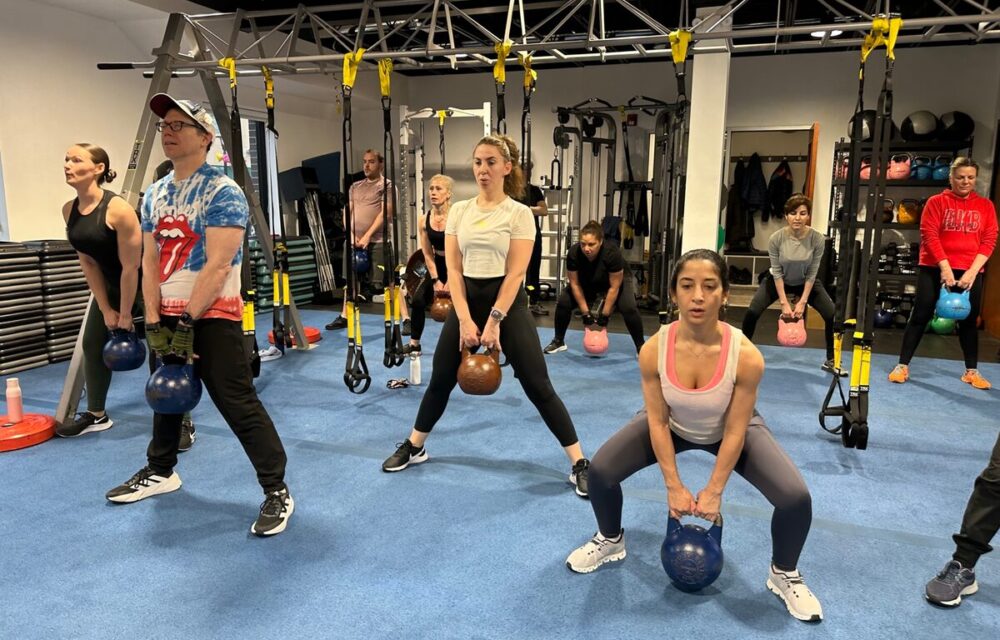
Group kettlebell exercises at VIP Personal Fitness in Fort Lee, NJ.

Is Semi-Private Training Right for You? A Practical Checklist

Semi-private training may fit you when you want personalized coaching, enjoy a small shared setting, and can practice suitable exercises without the trainer beside you every moment. It may not be the right starting point when you need continuous individual assistance, a different schedule, or clinical assessment before exercise.

At VIP Personal Fitness in Fort Lee, semi-private sessions last 45 minutes and include two to four clients. Use these five questions to prepare for a useful conversation, not to score yourself as fit or unfit.

1. What Do You Want Help Doing?

Choose a concrete starting goal: learn how to use resistance exercises, return to a repeatable routine, improve a particular strength task, or support a body-composition goal. “Get fitter” is a reasonable ambition, but a more specific first step helps explain what you need from the coach.

For example, someone who has not trained in years may initially need exercise instruction and a manageable schedule. Someone already training regularly may need a review of progression. Both could consider semi-private sessions, but their coaching needs are different.

2. How Much Uninterrupted Attention Do You Need?

In semi-private training, the coach divides attention among a small number of participants. Ask what happens while the trainer is helping another person: will you know your next exercise, the intended repetitions, and when to stop and ask for help?

Prefer private one-to-one coaching when you want the entire appointment focused on you. Private sessions at VIP Fitness Center are 30 minutes and take place upstairs in Suite 2. They are an alternative service, not a requirement that everyone must complete before joining a group.

3. Are There Health or Movement Issues to Discuss First?

Tell the team about relevant exercise restrictions, recent surgery, current pain, balance difficulties, or anything your clinician has advised. Sharing that context is more useful than guessing that a smaller group automatically makes every exercise suitable.

A trainer can discuss exercise options within their scope. They cannot diagnose an injury or provide medical clearance. Significant or unexplained symptoms may need healthcare assessment before a training-format decision. A fitness consultation and an InBody reading do not replace that assessment.

4. Can the Actual Appointment Times Fit Your Week?

Look at the coming four weeks rather than an ideal week. Include work, family responsibilities, travel, and the time needed to arrive. Two 45-minute sessions per week would mean eight appointments and six hours of scheduled training across four weeks, before travel.

Ask about current available times, booking procedures, and cancellation terms. Do not assume you can always move a missed visit to another day or bring a friend into an existing session. Resolve those details before choosing the package.

5. Would You Enjoy Sharing the Environment?

You do not need to be as strong or experienced as the other participants. You do need to feel comfortable asking questions, receiving feedback, and allowing someone else’s workout to be different from yours.

Some people prefer a larger coached class; others prefer a private appointment. Our comparison of semi-private, Strength Camp, Boot Camp, and private training explains the practical differences without treating one preference as better than another.

Bring These Notes to Your Consultation

Write down your main goal, the days you can realistically attend, any relevant restrictions, and the part of training you find most confusing. Add your questions about cost and what is included. You do not need a perfect exercise history, a target body-fat percentage, or a partner ready to join before asking about options.

The team can then discuss whether the available semi-private service fits those needs. Read our semi-private program guide for more about the shared coaching format.

What Would a Good First Month Look Like?

A useful early review asks whether you attended, understood the exercise instructions, could access appropriate help, and found the schedule manageable. It is not a promise of a particular weight change in four weeks. If the setting is not working, identify the problem and discuss a different approach.

Take the Next Step

Schedule your Free Body Diagnostic at VIP Personal Fitness. The complimentary 30-minute private consultation includes an InBody body-composition assessment and discussion of your goals, starting point, and schedule. Find us downstairs at 1620 Lemoine Ave, Suite 1, Fort Lee, NJ 07024.

There is no obligation to purchase. The consultation helps you understand your training options; it is not a medical diagnosis or a substitute for individualized healthcare advice.


Semi-Private vs. Small-Group Training: Which VIP Program Fits?

Semi-Private vs. Small-Group Training: Which VIP Program Fits?

Semi-private training is not automatically better than a well-coached group class. The better choice depends on how much individual attention you need, the environment you enjoy, your goals, and the times you can actually attend.

VIP Personal Fitness in Fort Lee offers semi-private training and coached group programs. Rather than asking which format wins in every situation, compare what each one would solve for you.

The Four Options at a Glance

  • Semi-private personal training: 45 minutes with two to four clients at VIP Personal Fitness, downstairs in Suite 1.
  • Strength Camp: 30-minute coached small-group strength training at VIP Personal Fitness.
  • Boot Camp: a 45-minute coached group workout at VIP Personal Fitness.
  • Private personal training: 30-minute one-to-one appointments at VIP Fitness Center, upstairs in Suite 2.

These are different services, not a ranking from least to most effective. A group class can include instruction and exercise modifications. Semi-private training still involves sharing the trainer’s attention.

Choose Around the Attention You Need

Semi-private is worth considering when you want feedback and a smaller setting but are comfortable practicing an agreed exercise while the coach assists someone else. Read how our semi-private format works for the practical details.

Private training may be a better fit when you strongly prefer privacy, need frequent explanation, or want the full appointment focused on you. Private coaching is not medical rehabilitation, however. An injury that needs assessment belongs with the appropriate healthcare professional before a trainer decides how to accommodate it.

Choose Around the Setting You Enjoy

Some people like the shared momentum of a class and feel more comfortable following a coached group session. Others want fewer people around them while they learn. Neither preference tells you how committed someone is.

Explore VIP Boot Camp when a group workout appeals to you, and discuss Strength Camp when a shorter strength-focused group session fits your week. Ask how a coach handles differences in experience before assuming that every person must use the same weight or pace.

Compare the Real Weekly Commitment

For an illustrative twice-weekly schedule, two 30-minute visits mean 60 minutes of appointment time; two 45-minute visits mean 90 minutes. Travel and changing add to both. The extra 30 minutes does not by itself establish a better program.

A conveniently timed class you can attend reliably may fit better than a smaller session that repeatedly conflicts with work. Equally, a short appointment may not provide the setting or attention you need. Confirm current availability rather than building a plan around an assumed time slot.

Compare Price With What Is Included

Ask for the current price, session length, number of visits, package terms, and any additional services included. Comparing only the price of one visit can hide differences in the total commitment. This article does not quote a starting rate because your decision should use the actual offer available when you register.

The relevant question is whether the service provides the coaching you need at a commitment you can maintain, not whether it is the least expensive option per minute.

Three Example Decisions

A returning beginner who wants a quieter learning environment: discuss semi-private and private options, including how much continuous attention is necessary. A person who enjoys coached group workouts and has a tight schedule: compare available Strength Camp times. A person who wants a longer group session: ask about Boot Camp and appropriate modifications.

These are hypothetical examples, not client case studies or guaranteed recommendations. Your history and the available sessions may change the answer.

How to Tell Whether the Choice Is Working

After starting, review attendance, the clarity of the coaching, and progress toward your chosen goal. Ask whether you understand the exercises and can get help when needed. Do not judge the format solely by soreness, exhaustion, or comparison with another participant.

Use our semi-private readiness checklist to prepare questions. A change of format can be sensible, but first identify what is missing instead of assuming that all group classes lack accountability or that smaller groups eliminate injury risk.

Discuss Your Options in Fort Lee

Book a Free Body Diagnostic at VIP Personal Fitness, 1620 Lemoine Ave, Suite 1. Your complimentary 30-minute consultation includes an InBody assessment and a conversation about the program that fits your goals and schedule. No purchase obligation; individual needs and results vary.


Semi-Private Personal Training in Fort Lee: How It Works

Semi-Private Personal Training in Fort Lee: How It Works

Semi-private personal training at VIP Personal Fitness means 45-minute coached sessions with two to four clients. You share the training environment and the trainer’s attention, while receiving guidance that takes your starting point and goals into account. It is a different service from a gym-only membership, a large exercise class, or a private appointment.

Our studio is downstairs at 1620 Lemoine Ave, Suite 1, Fort Lee. This guide explains what to consider before choosing semi-private training and how it compares with the other VIP programs.

What Does Personalized Coaching Mean in a Shared Session?

The important question is not whether everyone holds the same piece of equipment. It is whether the exercise, resistance, range of motion, and amount of work are appropriate for each person. Two clients might practice a similar movement while using different versions or different loads.

For example, one person could practice sitting down to and standing up from a box, while another performs a loaded squat. That is an illustration of how coaching can adapt a movement, not a fixed VIP workout or a promise that every participant always follows a completely separate program.

During your consultation, discuss the kind of feedback you need. Someone who needs uninterrupted assistance throughout every exercise may be better served by private training or by clinical rehabilitation, depending on the situation. A smaller group does not remove every limitation of sharing a trainer.

How a 45-Minute Session Can Be Organized

A useful session needs room for a check-in, preparation, selected exercises, rest, and coaching. An illustrative structure is five minutes to check in and warm up, 35 minutes for coached exercise and necessary rest, and five minutes to record the session and discuss the next step. Actual timing and exercise selection depend on the participants and the session.

The purpose is not to fill every second with movement. Learning a new exercise, adjusting equipment, or recovering between demanding sets can be a productive part of training. Moving faster is not automatically a better use of the appointment.

What Progress Should You Look For?

Choose a goal you can review: completing your planned visits, performing a familiar movement with more control, or gradually increasing appropriate training work. Record enough information to make a useful comparison rather than relying on how sweaty a session felt.

For strength goals, compare the same exercise under similar conditions. For a body-composition goal, discuss the broader plan and how measurements will be interpreted. An InBody reading adds information, but one measurement cannot explain everything about your progress or diagnose a health condition.

The American College of Sports Medicine’s resistance-training guidance emphasizes consistency and tailoring the program to individual goals. It does not establish that one group size guarantees better results for everyone.

How Semi-Private Differs From the Other VIP Options

Semi-private: 45-minute sessions for two to four clients, with personalized coaching in a shared setting. Strength Camp: a 30-minute coached small-group format. Boot Camp: a 45-minute coached group workout. All three belong to VIP Personal Fitness.

For dedicated one-to-one attention, VIP Fitness Center’s private 30-minute training is upstairs in Suite 2. Choose the level of attention and the setting you need; do not assume that the longest appointment or smallest group is automatically the best match.

Our training-format comparison explains these trade-offs in more detail.

Questions to Settle Before Registering

Confirm which available times fit your week, how your starting exercises will be chosen, what your package includes, and how booking and cancellation terms work. Ask how progress is recorded and when you will review it. Do not assume that bringing a friend is required, that a particular slot is available, or that every service has the same billing arrangement; confirm your actual options with the team.

Two weekly 45-minute appointments represent 90 minutes of scheduled training, before travel and changing. Three represent 135 minutes. Use the real time commitment, current package information, and your training needs to choose a workable schedule.

Start With a Free Body Diagnostic

Book your Free Body Diagnostic at VIP Personal Fitness. The complimentary 30-minute private consultation includes an InBody body-composition assessment and a conversation about your goals, experience, schedule, and suitable training options.

The consultation is separate from a semi-private workout and carries no obligation to purchase. It is a fitness assessment, not a medical diagnosis. Come with your questions; you do not need a complete training plan before your first visit.